
 Svenska
Cart
Your cart is empty, but doesn't have to be..
Your cart is empty, but doesn't have to be..
Hälla Kafferosteri |9/06, 2026
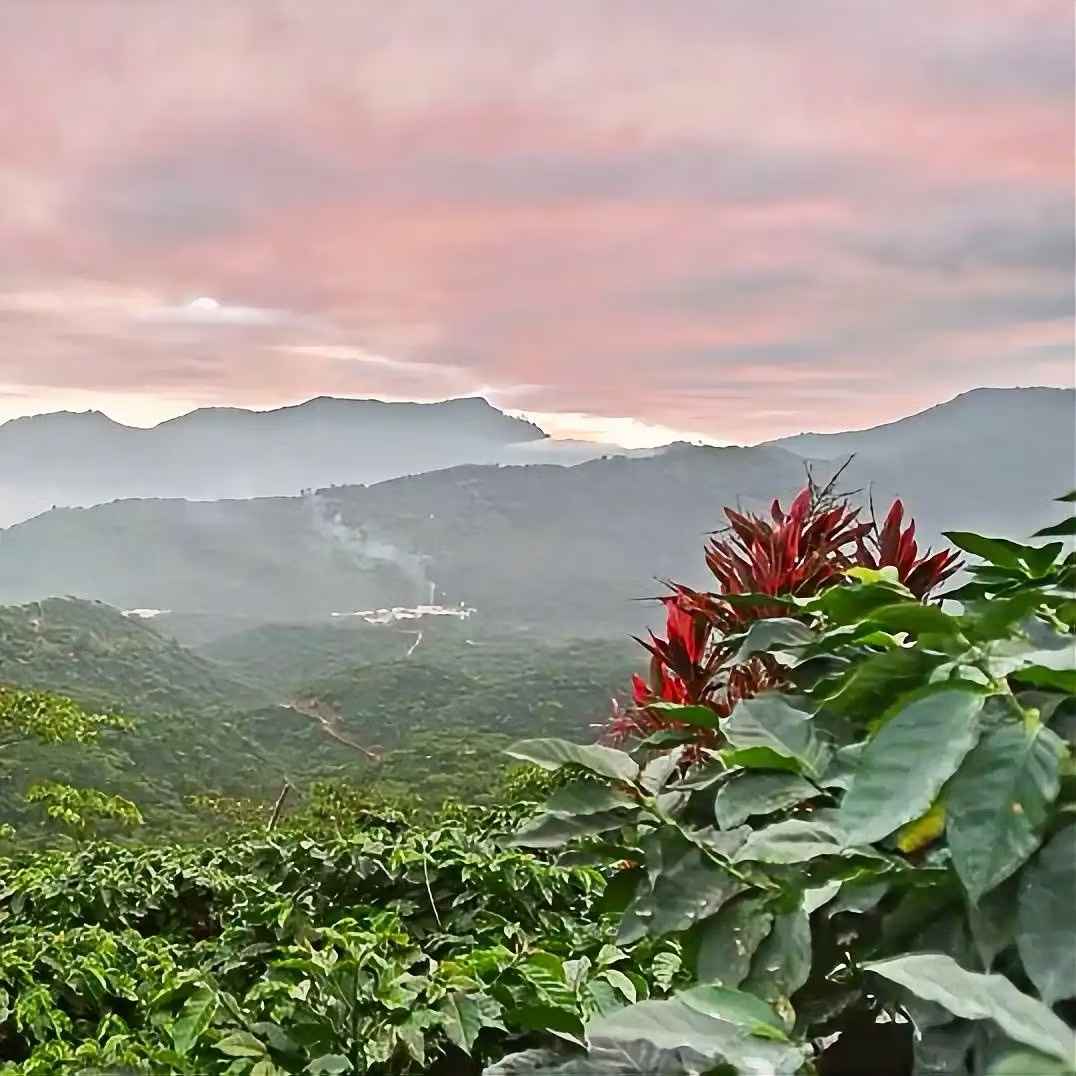
When you think of the world's top coffee regions, Mexico may not be the first country that comes to mind. But the truth is, Mexico is one of the coffee world's most exciting, yet often overlooked, treasures. With its unique flavor profiles, rich cultural heritage, and strong focus on organic farming, Mexican specialty coffee deserves a place in every coffee lover's cup.
In this guide, we dive deep into what makes coffee from Mexico so unique, which regions you should keep an eye on, and how the country's small-scale producers are shaping the coffee market of the future.
👉 Do you want to drink specialty coffee? Then visit our webshop:
Mexico's coffee journey began in the late 18th century, when the very first coffee trees were brought into the country. Initially, coffee was grown on large plantations owned by European immigrants, where the indigenous Mexican population worked under harsh conditions as laborers.
The big shift came in the early 20th century. After the Mexican Revolution, extensive land reforms were implemented that broke up the old colonial plantations and gave the land back to the people. This laid the foundation for the unique landscape we see today, where coffee is no longer controlled by large corporations but by independent small farmers.
During the 1970s and 1980s, the state stepped in and supported the industry through the national institute INMECAFE, which led to coffee accounting for a full 35% of the country's total agricultural production by the mid-1980s. When the institute was later closed after the collapse of the International Coffee Agreement, coffee farmers took matters into their own hands. They organized themselves into the strong cooperatives that have made Mexico a world leader in organic coffee today.
Forget huge, industrial fields – Mexican coffee today is all about small-scale. A full 95% of the country’s 515,000-plus producers grow coffee on less than three hectares, and around 85% of them are indigenous.
Thanks to the strong network of cooperatives that emerged from the challenges of history, small farmers have managed to transition to sustainable practices. Today, up to 8% of the country's producers are fully organically certified, making Mexico one of the world's largest exporters of organically certified coffee .
Generally speaking, Mexican coffee is known for being smooth, mild, and light-bodied. But don't let the word "mild" fool you—the potential for complexity is enormous.
At the Cup of Excellence (the most prestigious competition in the coffee world), a Mexican Gesha bean from Chiapas received a whopping 93.07 points. The judges found complex notes of jasmine, bergamot, lemongrass and vanilla with a buttery mouthfeel.
In Mexico, Arabica is grown almost exclusively (Robusta accounts for only 3–4%). Approximately 35% of the coffee is grown at an altitude of around 900 meters above sea level, which in Mexico's cooler climate provides perfect conditions for high-quality beans. The dominant processing method is washed coffee , which accounts for 90% of production, while the remaining 10% is divided between honey and natural processes.
👉 If you want to learn more about the points system in Specialkaffe, read more here:
https://hallakafferosteri.com/blogg/vad-ar-cup-score-guide-till-scas-poangsystem-halla-kafferosteri
The taste of your coffee depends entirely on where in Mexico it was grown. Here are the three most important regions:
It was here, on the Gulf of Mexico, that the country's very first coffee trees were planted in the 18th century. The coffee is grown here at altitudes between 1,100 and 1,600 meters. Veracruz is the most technologically advanced region with controlled sowing and modern agricultural methods.
Flavor profile: Delicate with a clear acidity, hints of bright red berries, blueberries, caramel and panela (cane sugar) with a juicy and sweet-sour aftertaste.
Chiapas borders Guatemala and accounts for a whopping 40% of Mexico's total coffee production. Despite being one of the country's poorest regions, the terrain and high altitudes (1,300–1,700 meters) produce absolutely world-class coffee.
Taste profile: A round and long-lasting body with rich notes of chocolate, nuts, citrus, lemon and a pleasant bitterness.
In Oaxaca, the Pacific Ocean meets dramatic mountain ranges (900–1,650 meters). Here, modernization has been deliberately avoided in favor of traditional methods. Many farms are over 80 years old and are run exactly as they were in the 1940s. Great care is taken to preserve old, unique coffee varieties – such as Pluma Hidalgo , a local variant of Typica that has been grown by indigenous people since the mid-19th century.
Taste profile: Very sweet with caramel tones, hints of yellow fruits, orange acidity, creamy body and floral undertones.
It hasn't always been easy for Mexican farmers. The 2018 coffee crisis with dumped world market prices and a devastating outbreak of the fungal disease coffee leaf rust ( la roya ) in 2012 halved production for a period.
To survive, many farmers were forced to replace old trees with more resistant varieties. However, this led to soil erosion on the steep mountain slopes, as the new varieties required more sun and fertilizer and therefore less shade.
Today, the industry is recovering rapidly, with production once again reaching over 4 million bags per year. The key to the future is sustainability, technical assistance and fair pricing . By buying Mexican specialty coffee (where the purchase price is based on the quality of the coffee rather than the low market price), consumers are helping farmers invest in their farms. Experts also emphasize the importance of working with local, traditional coffee varieties that are naturally adapted to their environment, requiring less intervention and protecting the local ecosystem.
Mexico offers a stunning diversity. Whether you’re drawn to the technical precision of Veracruz, the rich chocolate tones of Chiapas, or the historic artisanal traditions of Oaxaca, there’s something for everyone. The next time you’re choosing coffee beans, look for Mexico on the bag – you’re not only supporting small-scale indigenous producers with a rich history, but you’re also getting a unique and sustainable taste experience in your cup!
👉 Want to discover more exciting coffee origins? Subscribe to our newsletter so you don't miss a thing.
https://hallakafferosteri.com/sidor/nyhetsbrev
Have a nice day!
/ Kaj and Dan, Hälla Coffee Roastery