
 Svenska
Cart
Your cart is empty, but doesn't have to be..
Your cart is empty, but doesn't have to be..
Hälla Kafferosteri |16/06, 2026
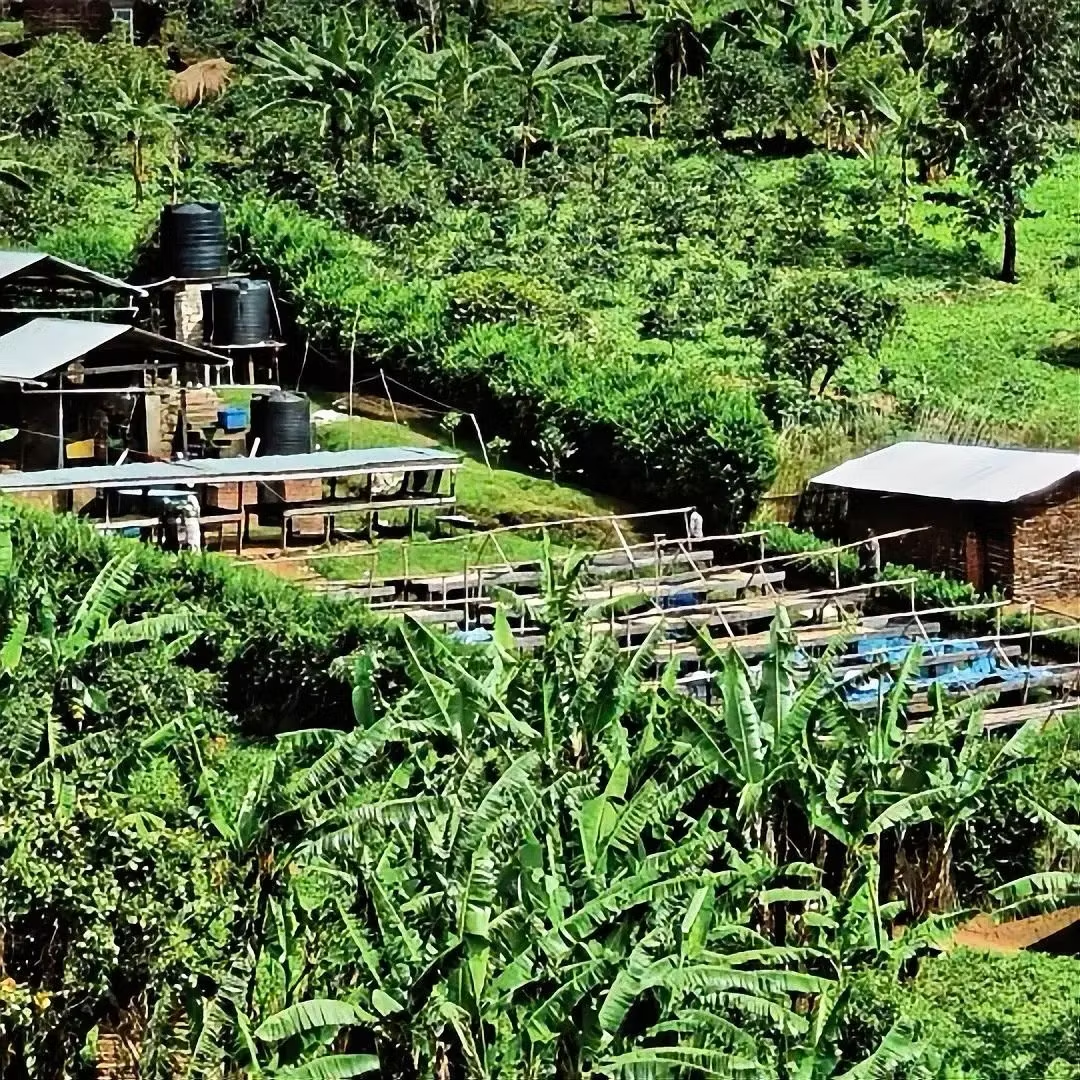
When we talk about East African coffee, we often think straight away of the berry notes of Ethiopia or the fresh acidity of Kenyan coffee. But there is another country in the region with a coffee history that is as dramatic as its flavour profile is unique: the Democratic Republic of Congo (DR Congo) .
Here, coffee grows in mineral-rich, volcanic soil at extreme altitudes. Despite the country’s deep wounds from decades of conflict, a new wave of high-quality specialty coffee is emerging. Let’s delve into the history, challenges, and bright future of Congolese specialty coffee.
👉 Do you want to learn more about African coffee?
https://hallakafferosteri.com/blogg/afrika
During the 1970s and 1980s, the DR Congo was one of Africa's largest coffee exporters. After coffee production was nationalized in the 1970s, the sector boomed, and by the late 1980s the country was exporting around 120,000 tonnes of coffee per year. Coffee was the country's second largest export after copper and generated huge revenues for the economy. Although the majority of this was robusta coffee, there was a large and untapped potential for high-quality washed arabica coffee in the eastern mountainous regions.
Everything changed in the 1990s. After the country's independence and the ensuing civil war, combined with tensions from the 1994 genocide in neighboring Rwanda, the DR Congo was plunged into a series of devastating conflicts. It is estimated that over six million people lost their lives, and millions were forced to flee.
The coffee industry suffered a total collapse. Coffee farms were abandoned as farmers fled for their lives. Infrastructure was bombed, roads disappeared and washing stations were destroyed. By 2002, exports had dropped from 120,000 tonnes to just under 10,000 tonnes.
The most tragic thing, however, was how coffee was transformed into a contraband commodity and a danger to life. Without functioning domestic export markets, coffee farmers in eastern Congo were forced to smuggle their green coffee across Lake Kivu to Rwanda in fragile wooden canoes (piroges) in order to be able to sell it at rock-bottom prices. Many young farmers drowned in storms or were attacked by rebels – coffee in Congo became known as "the most dangerous cup of coffee in the world" . Today, it is still estimated that up to 70% of the coffee is smuggled out to neighboring countries due to poor logistics.
Today, the DR Congo is in a post-conflict and transitional phase. Although the security situation in the eastern parts is still fragile and rebel activity is present, the coffee sector is experiencing an incredible renaissance. Thanks to international aid projects (including from USAID and World Coffee Research) and courageous local cooperatives, the coffee industry is being rebuilt from the ground up.
Farmers are organizing themselves into cooperatives (like the famous Muungano cooperative), new modern washing stations are being installed, and the focus has shifted completely: from bulk coffee to specialty coffee . By focusing on the highest possible quality, Congolese farmers can finally be paid fairly, which helps lift entire communities out of poverty.
Logistics is still a major challenge. The coffee often has to be transported long distances on poor roads, via towns like Beni or Mutembo, then through Uganda all the way to the port of Mombasa in Kenya to be shipped out into the world. A journey that can take anywhere from two weeks to over a month.
All specialty coffee in the DR Congo is grown in the eastern parts of the country, along the coffee-rich Albertine Rift Valley, where growing conditions are optimal.
Kivu (North Kivu and South Kivu): This is the heart of Congo’s specialty coffee production. The region surrounding the beautiful Lake Kivu offers volcanic soil, high humidity and altitudes ranging from 1,480 to over 2,000 meters above sea level. It primarily grows high-quality Bourbon (as well as varieties such as SL34). The coffee from here is often characterized by a complex, lively acidity, full body and flavors of dark berries, stone fruits and spicy chocolate.
Ituri: North of Kivu lies Ituri province, which also has fantastic conditions with its high mountain plateaus, but which has historically been hit hard by conflict and is now slowly starting to recover.
The future of Congolese specialty coffee is filled with both challenges and enormous potential. Coffee experts around the world describe the DR Congo as one of the last, completely untapped regions in the world for unique and fantastic Arabica coffee. Big players have also taken notice; coffee giants such as Nespresso have invested millions in the country to help rebuild the sector.
The biggest challenges ahead are to renew the old coffee trees (many trees are aging and yield low yields), improve infrastructure (electricity, roads and running water are often lacking at the washing stations) and reduce widespread corruption.
Despite this, the goal is clear: Coffee is now seen not just as an agricultural product in Congo, but as a tool for peace, stability and economic independence. Every time you drink a cup of specialty coffee from DR Congo, you are supporting a movement that is transforming a conflict-filled history into a tasty and hopeful future.
Keep an eye out for our range at Hallå Kafferosteri – we are constantly looking for unique batches of specialty coffee to share this fantastic taste experience with you!
👉 Do you want to drink specialty coffee? Then visit our webshop:
Have a nice day!
/ Kaj and Dan, Hälla Coffee Roastery