
 Svenska
Cart
Your cart is empty, but doesn't have to be..
Your cart is empty, but doesn't have to be..
Hälla Kafferosteri |20/07, 2026
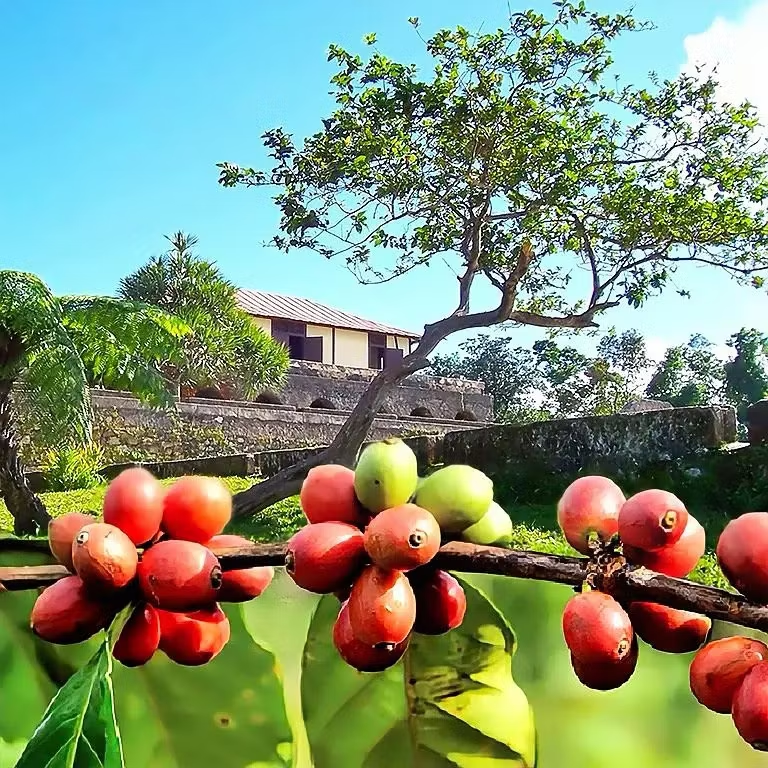
When you think of Cuba, you might quickly think of colorful vintage cars in Havana, hand-rolled cigars and pulsating salsa rhythms. But for coffee lovers, this Caribbean island hides another, deep-rooted treasure: a unique coffee culture and beans with a fascinating history.
Cuba has undergone enormous changes – from being one of the world’s largest coffee producers to suffering from severe production declines. Today, however, the country is bubbling over with a new coffee revolution where the focus is on sustainability, modern technology and exciting fermentation processes. Join us on a journey to Cuba and discover what makes Cuban coffee so special!
👉 Do you want to learn more about different arbacia varieties?
https://hallakafferosteri.com/blogg/guide
The history of coffee in Cuba dates back to 1748, when José Antonio Gelabert brought the first coffee seeds from Santo Domingo (today the Dominican Republic) and started the first plantation outside Havana.
The real boom, however, came a few decades later, around 1791, when French planters fled the Haitian revolution and settled in southeastern Cuba. They brought with them more structured and sophisticated farming methods and established what are known as cafetales . Today, the ruins of these French coffee plantations are actually listed as a UNESCO World Heritage Site.
During the 19th and early 20th centuries, production flourished, reaching its peak in the mid-1950s with harvests of over 20,000 tons per year. But after the Cuban Revolution in 1959, everything changed. Agriculture was nationalized, coffee farms were replaced by other crops, and the US trade embargo strangled export opportunities. Coffee was rationed for the local population, but despite the tough times, coffee remained a sacred part of the Cuban people's soul.
Cuba currently produces around 9,000 to 11,000 tons of coffee per year. Approximately 60% of this is Arabica and the remaining 40% is Robusta.
The most famous and unique Arabica varieties on the island are called Isla 6-14 and Isla 6-11 – varieties that have been developed specifically to be resistant to the dreaded coffee rust ( la roya ). However, classic varieties such as Bourbon and Caturra Rojo are also grown.
Coffee is grown primarily on the shady mountain slopes of provinces such as Santiago de Cuba and Granma. Many of the finest plantations are hidden in and around protected national parks, such as:
Pico Turquino (Cuba's highest point)
Pico Cristal
The Great Stone
These unique microclimates give the coffee a rich, heavy body and a natural sweetness, often with balanced notes of dark chocolate, nuts and tobacco.
After decades of stagnation, Cuban coffee is making a comeback through international collaborations and a focus on specialty coffee. Major players, including the Lavazza Foundation, are now working closely with hundreds of local farmers to improve quality and create a more sustainable supply.
This new wave has brought two exciting trends to Cuban coffee farms:
Experimental processes have become increasingly common to elicit unique flavor profiles. In Cuba, they have recently started applying controlled fermentation to the local Robusta beans. By fermenting the coffee berries with carefully selected yeast for up to 72 hours, they manage to dampen the bitterness and instead highlight complex, sweet flavors of milk chocolate, almonds and an almost vinous aftertaste.
As today's coffee consumers demand transparency, blockchain technology has been introduced into the Cuban coffee chain. Through a QR code on the bag, the consumer can track the coffee's exact journey from the specific farm in the Cuban mountains, through harvest time, climate data, fermentation process and all the way to the roastery.
You can't talk about coffee in Cuba without mentioning how it's drunk locally. In the early 20th century, there were over 150 coffee houses in Havana, and it was here that the iconic Café Cubano (or Colada ) was born.
A true Café Cubano is an intense experience. It is a double, dark roasted espresso brewed directly over sugar. The secret lies in what is called espumita – a light, thick foam created by whisking the very first drops of coffee vigorously with sugar before pouring in the rest of the espresso. The result is a sweet, syrupy and incredibly powerful coffee shot.
Cortadito: A Café Cubano that is "cut off" with half steamed milk (similar to a Macchiato).
Café con Leche: A large cup of hot milk served with an espresso on the side to be mixed to your liking.
The Cuban coffee belt still faces challenges, but the potential is enormous. By combining the island's rich coffee heritage with modern organic farming methods, biodiversity protection and new processing technologies, Cuba is well on its way to reclaiming its place on the world map for specialty coffee.
Keep an eye out the next time you choose coffee beans – drinking a traceable, sustainably grown coffee from Cuba's mist-shrouded mountains is a unique taste experience you don't want to miss!
Want to read more about how coffee is grown and tastes in other parts of the world? Check out our other origin guides on the blog!
👉 Do you want to drink specialty coffee? Then visit our webshop:
Have a nice day!
/ Kaj and Dan, Hälla Coffee Roastery