
 Svenska
Cart
Your cart is empty, but doesn't have to be..
Your cart is empty, but doesn't have to be..
Hälla Kafferosteri |28/08, 2026
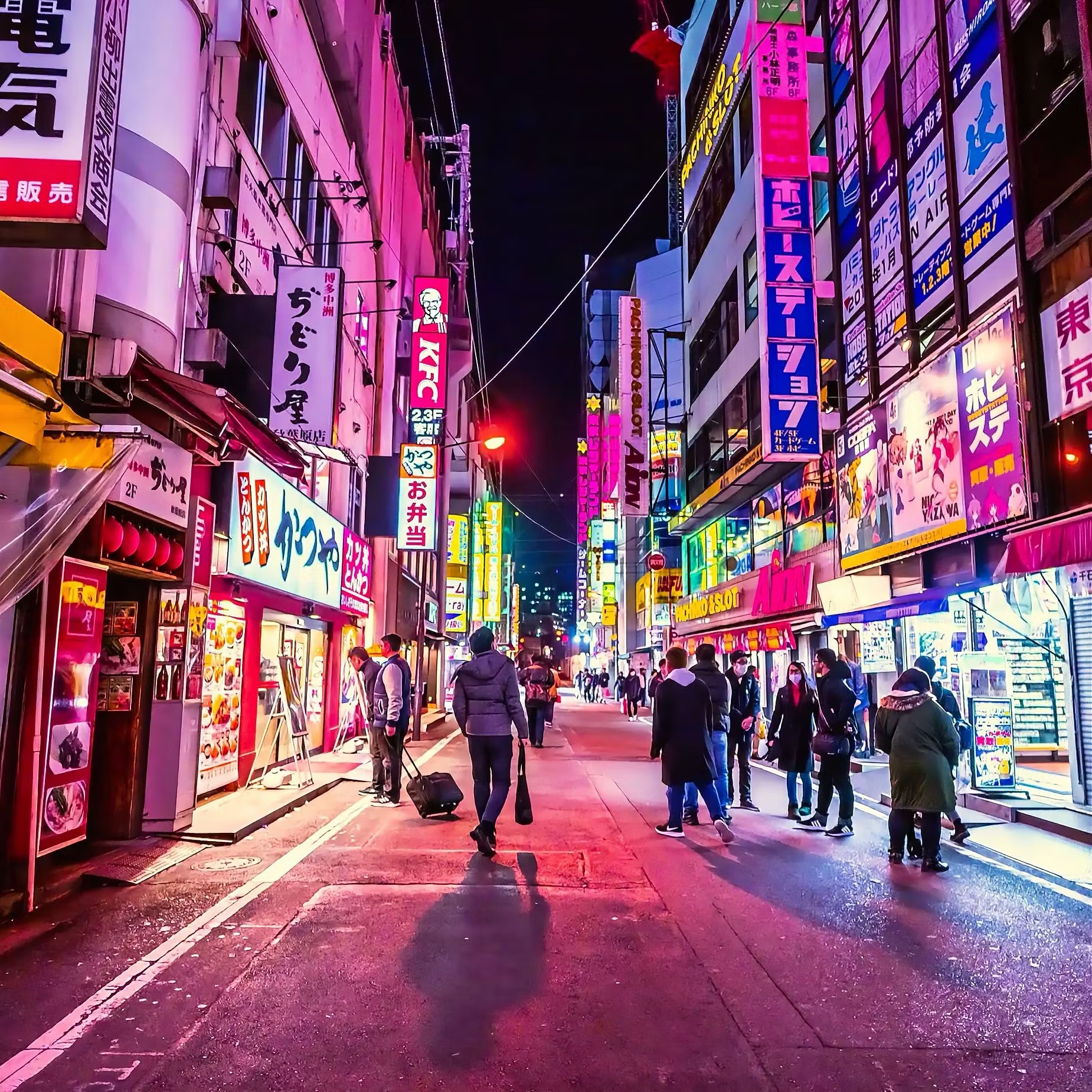
Few countries in the world have had as much of an impact on the modern specialty coffee scene as Japan. Long before brewing methods like V60, Syphon, and pour-over became trendy in Western micro-cafes, Japanese artisans had refined coffee brewing into an art form of its own.
Japan's relationship with coffee is a unique combination of tradition, patience, and an uncompromising pursuit of perfection. In this post, we take a closer look at how Japan went from being a classic coffee house to becoming one of the world's most respected coffee nations.
👉 Do you want to learn more about coffee?
https://hallakafferosteri.com/blogg/guide
1. The Legacy of Kissaten – Japan’s Historic Coffee House
To understand Japan's coffee scene, you have to start with Kissaten (喫茶店). These traditional coffee houses emerged in the early 20th century and reached their heyday in the post-war era.
A Kissaten is not a place where you grab a quick espresso at the counter. It is a calm, subdued oasis characterized by dark wood, classical music and an extreme focus on hospitality ( Omotenashi ).
Within the Kissaten culture, several iconic Japanese crafts emerged:
Nel Drip (Cloth Filter): The coffee is slowly brewed through a cloth filter, often with a very dark roast profile, resulting in a full-bodied and silky cup.
Syphon and Siphon brewers: Scientific precision meets show – the vacuum method that produces incredibly pure and aromatic coffee.
Precision in every movement: The pouring jug's jet, the water temperature and the time indication are measured with millimeter precision.
In recent decades, the traditional Kissaten culture has met the third wave coffee revolution. Many young Japanese baristas and roasters have taken the artisanal approach of the old coffee houses and applied it to light roasted single origin beans .
The result was a whole new standard for the coffee industry globally. Japanese companies like Hario (creator of the famous V60 dripper), Kalita and Kinto have become world leaders in manual brewing equipment.
Kodawari (Obsession with Details): A constant pursuit of improving every little part of the process – from water filtration and grinding grade to the origin of the bean.
Respect for the raw material: The coffee bean is treated with the same reverence as the raw materials in Japanese cuisine.
Clear flavor profiles: A major focus is on clean, balanced cups where floral and fruity nuances are allowed to take their place without being overpowering.
You can't talk about coffee in Japan without mentioning Kan Kōhī (canned coffee). Alongside artisanal coffee shops, coffee is available in hundreds of thousands of vending machines lining the streets – both hot and cold, 24/7.
This accessibility has made coffee a natural part of every Japanese's everyday life, which in turn has laid the foundation for the great interest in premium beans.
At Hälla Kafferosteri, we have enormous respect for Japanese craftsmanship. It reminds us that coffee is not just a drink – it is a craft that requires care at every step.
When we roast our beans, we look for the same balance, purity and clarity of flavor notes that characterize the Japanese specialty scene.
Want to practice your own pour-over at home? Discover our range of freshly roasted coffee beans in the online shop and find the perfect bean for your V60 or press pot!
👉 Explore our specialty coffee range here:
Have a nice day!
/ Kaj and Dan, Hälla Coffee Roastery