
 Svenska
Cart
Your cart is empty, but doesn't have to be..
Your cart is empty, but doesn't have to be..
Hälla Kafferosteri |16/11, 2023
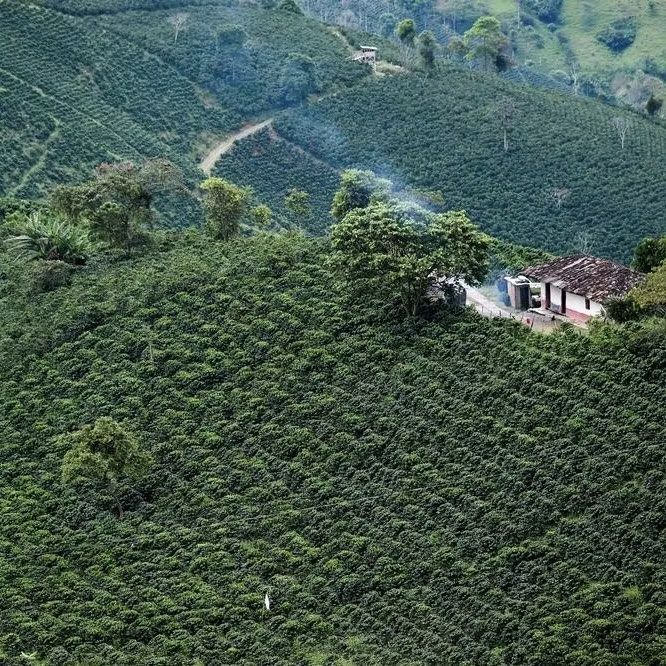
Colombia is one of the world's most iconic coffee countries, known for its majestic mountains, stable climate and passion for quality. But behind every cup of Colombian coffee lies a crucial factor that is often overlooked – how the coffee is processed after harvest.
The processing method plays a central role in shaping the taste, aroma and body of the coffee. In Colombia, several different methods are used, with each technique giving its own expression in the cup.
So what sets them apart – and how do they affect your coffee experience?
After the coffee berries are harvested, they must be processed to extract the beans. This is where the processing method comes in – and this is where the magic happens.
The washed method is the most widely used in Colombia and is considered a standard for high-quality coffee.
Process:
Ripe coffee berries are picked
The pulp is removed
The beans are fermented in water (approximately 12–36 hours)
Washed and dried
Flavor profile:
Clean and clear cup
Light, clear acidity
Floral and fresh tones
This is the method that best highlights the coffee's origin and terroir.
One example is La Pastora from Antioquia – a medium roast coffee from a farm where sustainability is a focus. With 30% of the land set aside as a nature reserve, a unique microclimate is created that contributes to both quality and biodiversity.
👉 You can find our entire coffee range in our webshop:
The Honey process is a cross between washed and natural.
Process:
Some of the pulp is left on the bean
The beans are dried with this layer remaining.
Flavor profile:
Increased sweetness
Soft body
Balanced acidity
Depending on how much pulp is left, you can get different variations:
White honey – light and subtle
Red honey – more fruity and sweet
Yellow honey – aromatic and balanced
Honey-processed coffee often produces a rounder and sweeter profile compared to washed coffee.
The Natural process involves drying the entire coffee berry before extracting the bean.
Process:
The coffee berries are dried in the sun with the pulp remaining.
Natural fermentation takes place inside the berry
The beans are taken out after drying.
Flavor profile:
Full body
Intense fruitiness
Notes of tropical fruits and berries
Naturally processed coffees are often more expressive and powerful in flavor.
One example is Los Hermanos from Nariño – a light roast coffee from third-generation coffee producers. Here, coffee is grown alongside fruit and shade trees, with a strong focus on soil health and sustainable water use.
Understanding processing methods makes it easier to choose coffee according to taste preference.
Washed:
Clean
Clear acid
Elegant
Honey:
Sweet
Soft
Balanced
Natural:
Fruity
Mellow
Intensive
The choice of process doesn't just affect the taste – it affects the entire experience.
Colombia's climate and geography make the country particularly suitable for several different processing methods:
Stable climate all year round
Access to water (perfect for washing)
High altitudes that provide slow drying
Innovative producers
This allows Colombia to offer a wide variety of flavor profiles, even within the same region.
Coffee from Colombia is not just about origin – but about how the coffee is treated after harvest.
By understanding process methods, you can:
Identify taste preferences
Choosing the right coffee for your brewing method
Appreciate the complexity of each cup
Whether you prefer the pure elegance of washed coffee, the balanced sweetness of honey, or the intense fruitiness of natural – Colombia offers something for every coffee lover.
Want to explore the difference yourself?
Take a look at our range of Colombian coffees – from classic washed profiles to more experimental processing methods.
The next time you drink a cup of coffee, think about the journey from berry to brew. The process is not just a step – it’s a crucial part of the flavor.
👉 You can find our entire coffee range in our webshop:
/ Kaj and Dan, Hälla Coffee Roastery