
 Svenska
Cart
Your cart is empty, but doesn't have to be..
Your cart is empty, but doesn't have to be..
Hälla Kafferosteri |27/07, 2026
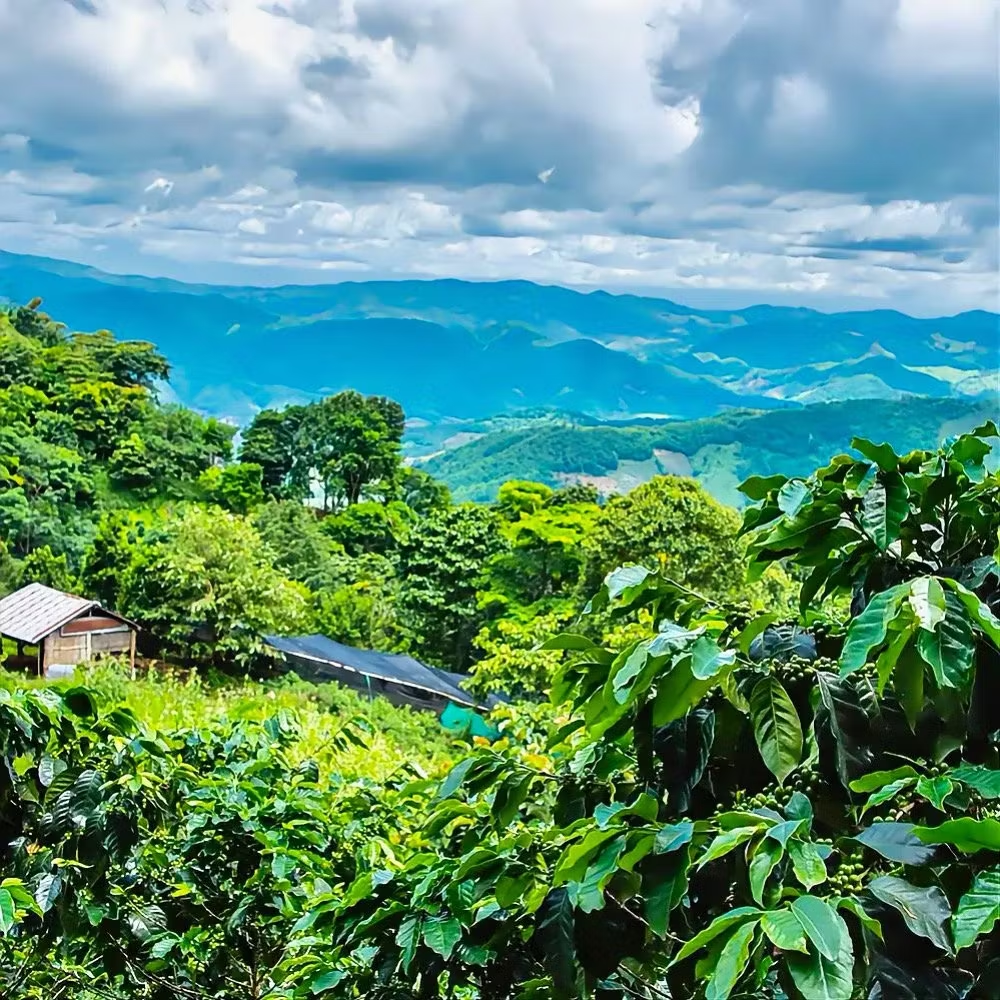
When most people think of Thailand, they often think of pristine beaches, colorful street food, and ancient temples. But in the coffee world, Thailand is establishing itself as one of the most exciting and dynamic upstarts in Southeast Asia.
With a fascinating history that stretches from opium fields to sustainable agriculture, and a rapidly growing indigenous specialty coffee culture, Thai coffee is something out of the ordinary. At Hälla Kafferosteri, we guide you through Thailand's unique coffee journey.
Did you know? The very best Arabica beans from Thailand are rarely exported to Europe. The reason? Domestic demand in Thailand is so enormous that local cafes and roasteries buy up almost the entire harvest directly on site!
👉 Do you want to learn more about coffee from different countries?
https://hallakafferosteri.com/blogg/guide
Coffee plants were introduced to Thailand as early as the mid-19th century, but commercial production did not take off in earnest until the 1970s.
The background was a comprehensive community project initiated by King Bhumibol Adulyadej (Rama IX) in collaboration with the United Nations (UN). In the mountainous northern regions, which were historically part of the infamous “Golden Triangle”, many hill people made their living from opium cultivation.
The King's project introduced coffee as a replacement crop to provide farmers with a legal, sustainable and more profitable source of income. The venture was a huge success:
Economic empowerment: The farmers gained a stable living space outside the control of the drug cartels.
Knowledge transfer: Research stations were established to teach farmers how to process beans.
Environmental aspect: Coffee cultivation contributed to reforestation and soil stabilization in mountainous areas.
Thailand is currently ranked as one of the three largest coffee producers in Southeast Asia (along with Vietnam and Indonesia). The growing landscape is clearly divided based on climate and altitude:
In regions such as Chiang Mai , Chiang Rai , Doi Pangkhon and Doi Chang, Arabica is grown at altitudes between 1,000 and 1,500 meters above sea level. The cooler microclimate allows the coffee berries to ripen slowly, developing complex and sweet flavor profiles.
In the southern provinces (such as Chumphon and Ranong) Robusta cultivations dominate. Historically, this coffee has been mainly used for instant coffee and commercial blends, but in recent years the trend towards Fine Robusta (high-quality, artisanally processed Robusta) has begun to gain traction.
Unlike many traditional coffee countries where the average age of coffee farmers is high and the coffee is exported raw as a raw material, Thailand has a completely unique dynamic:
Young and innovative generation: Many of today's coffee farmers in northern Thailand are in their 20s to 40s. Many own their own micro-roasteries or cafes in cities like Bangkok and Chiang Mai, and experiment wildly with fermentation, drying profiles, and varieties.
Own micro mills: Many family farms have their own small washing stations ( micro mills ), which gives them full control over the quality from picking to finished dried parchment beans.
Strong domestic market: Thais are drinking more coffee and local consumers appreciate the craftsmanship. This has created a local market where farmers are paid really well for their best harvests.
Arabica from the northern mountains is often characterized by a fantastic balance between sweetness and acidity.
| Properties | Taste description |
| Body | Medium-bodied, silky and round |
| Sweetness | Clear notes of cane sugar, caramel and chocolate |
| Fruitiness & Florality | Notes of citrus, tropical fruit, jasmine and dark berries |
| Aftertaste | Clean and smooth with a hint of spiciness or nuts |
Production volume: Approximately 20th largest coffee producer in the world.
Main varieties: Catimor, Catuai, Bourbon, Typica (Arabica) and Robusta.
Harvest period: November to March.
Processing methods: Washed, Honey-processed and Natural/sun-dried.
👉 Do you want to drink specialty coffee? Then visit our webshop:
Have a nice day!
/ Kaj and Dan, Hälla Coffee Roastery