
 Svenska
Cart
Your cart is empty, but doesn't have to be..
Your cart is empty, but doesn't have to be..
Hälla Kafferosteri |21/07, 2026
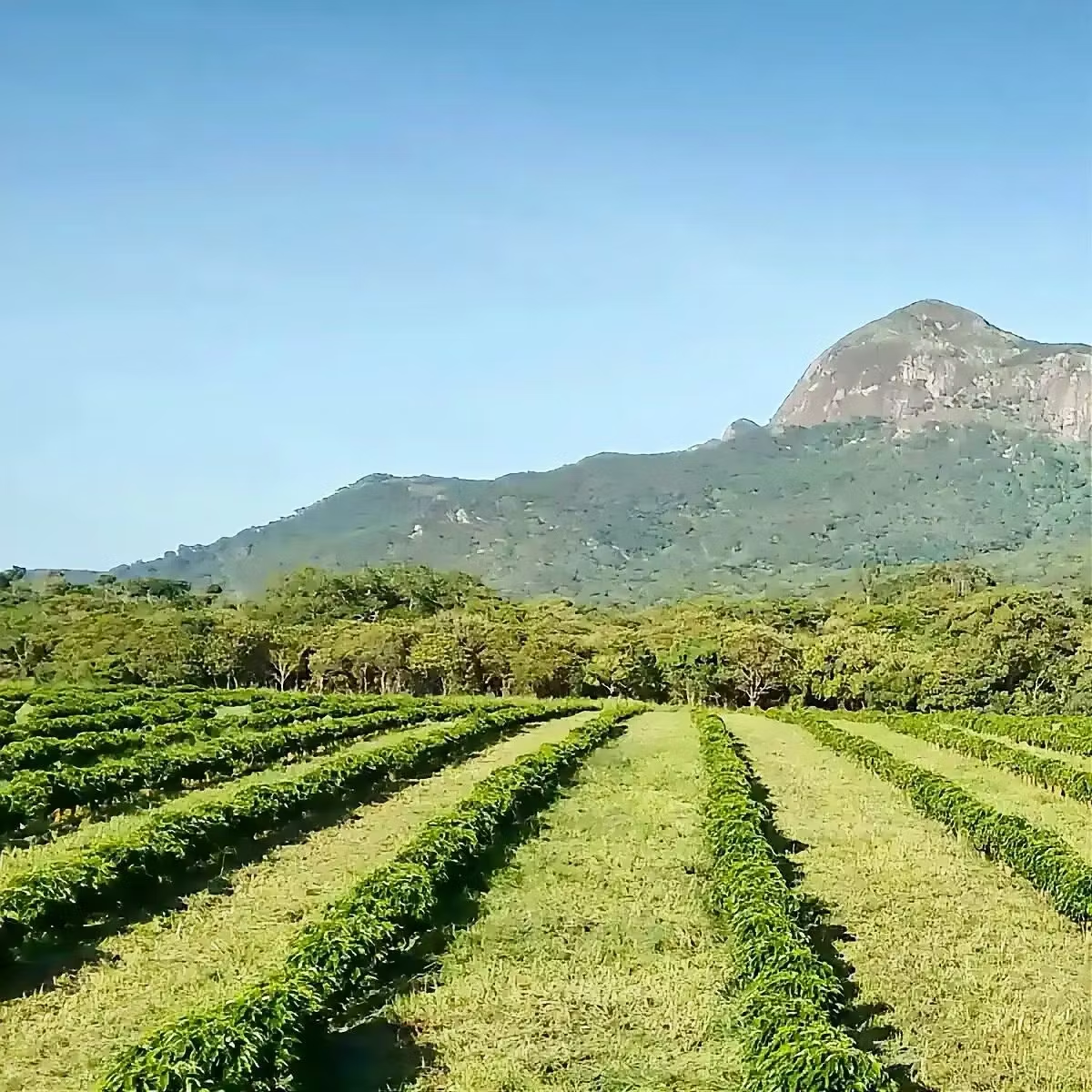
When it comes to East African coffee, giants like Kenya and Ethiopia often steal the spotlight. But hidden in the shadows of its more famous neighbors is Malawi – a small, landlocked country that produces coffee of exceptional quality.
Malawi is known as the "Warm Heart of Africa" due to its hospitable people, but for coffee lovers, it's the sweet, floral and complex beans that make their hearts beat faster. Join us as we explore Malawi's unique coffee history, the challenges farmers face and why these beans deserve a place in your coffee cup!
👉 Do you want to learn more about different arbacia varieties?
https://hallakafferosteri.com/blogg/guide
Coffee's journey in Malawi began in the late 19th century when Scottish missionary Dr. John Buchanan brought a Nyasaland coffee tree (a Bourbon/Typica variety) all the way from the Royal Botanic Gardens in Edinburgh.
Until Malawi's independence in 1964, most coffee farms were owned by British colonists, with the greatest concentration in the southern regions around Thyolo and Mulanje. During this time, working conditions for the local population were very harsh.
After independence, a major reform began. In 1971, the Smallholder Coffee Authority (SCA) was established to provide small-scale farmers with access to credit and marketing. After a period of financial mismanagement, this was restructured in 1999 as the Smallholder Coffee Farmer's Trust . This was an important step forward as the farmers themselves were allowed to take over the operation and the cooperatives were given more power. Today, a large part of the coffee is collected in processing stations in Mzuzu, the capital of the Northern Region.
Malawi has fantastic conditions for coffee cultivation thanks to its subtropical climate, nutrient-rich soils and dramatic landscapes. Yet production volumes are surprisingly small. In 1993, the country exported around 109,000 bags of coffee – a figure that has fallen to around 9,000 bags a year in recent decades.
What Malawi lacks in quantity, they make up for in quality. It's all about genuine craftsmanship:
100% Arabica: Malawi grows exclusively Arabica coffee.
Natural defense: Coffee trees are often planted strategically on slopes to prevent soil erosion.
Artisanal farming: The majority of coffee is grown by small farmers who pick the berries by hand and process them using the washed process.
Until the early 2000s, Caturra was by far the most popular coffee variety in the country. Today, we see a mix of traditional varieties and more resistant strains.
Since Malawi generally has a slightly lower growing altitude (around 800–1200 meters above sea level) than neighboring Tanzania, the coffee trees are more susceptible to diseases such as coffee rust ( la roya ). Therefore, a lot of Catimor , Catuai and the historic Nyasaland variety are grown, as well as the exclusive Geisha in places such as the Livingstonia Plateau in the north.
What does Malawian coffee taste like? Malawian coffee is often described as exceptionally smooth, delicate and sweet. It offers a distinct florality and complex flavor notes that draw on licorice, spices and ripe berries. A perfect coffee for those who appreciate a clean, elegant and balanced cup.
Producing coffee in Malawi is not without its challenges. As the country is completely landlocked and far from the nearest export port, logistics pose a major economic and practical challenge for farmers. In addition, climate change and plant diseases have made harvests more unpredictable.
Despite this, intensive work is underway to rejuvenate the Malawian coffee industry. By focusing hard on specialty coffee and sustainability, and by giving cooperatives better tools, Malawi hopes to reach more international roasters looking for unique microlots.
When you choose a bag of coffee from Malawi, you're not just drinking world-class coffee – you're also supporting a small-scale, passionate coffee movement in one of Africa's most colorful countries.
Are you curious to discover more unique coffee countries? Check out our other origin guides on the blog or visit our roastery to find your new favorite bean!
👉 Do you want to drink specialty coffee? Then visit our webshop:
Have a nice day!
/ Kaj and Dan, Hälla Coffee Roastery