
 Svenska
Cart
Your cart is empty, but doesn't have to be..
Your cart is empty, but doesn't have to be..
Hälla Kafferosteri |28/07, 2026
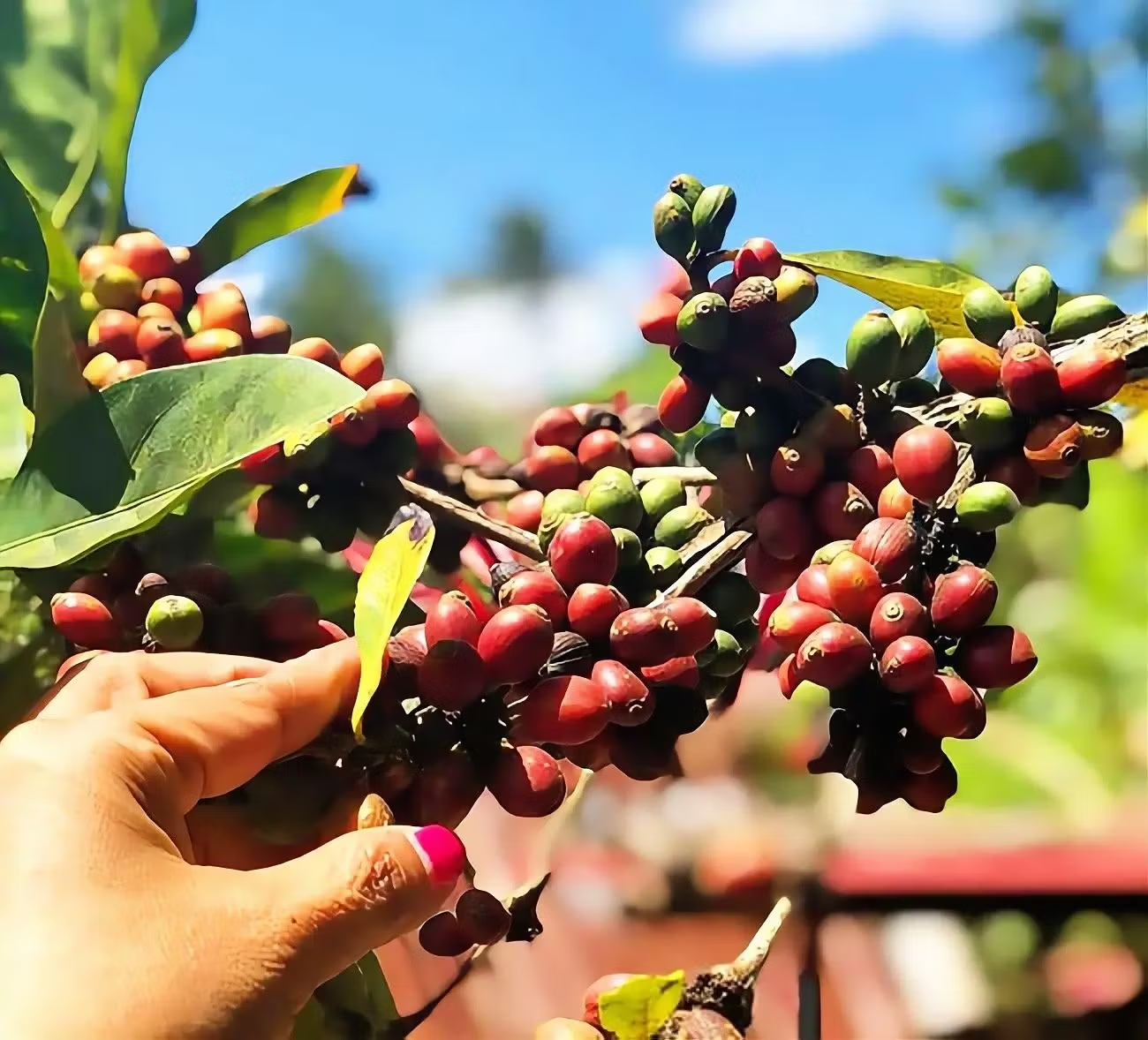
Kaffe från Filippinerna: Historia, Liberica & Den nya specialkafferörelsen
När man pratar om kaffeländer i Asien hamnar fokus ofta på giganter som Vietnam eller Indonesien. Men visste du att Filippinerna har en av världens mest unika kaffekulturer? Det är ett av ytterst få länder i världen som kommersiellt odlar alla fyra huvudsakliga kaffesorter: Arabica, Robusta, Liberica och Excelsa.
Från en guldålder på 1800-talet till ett nästan totalt kollaps på grund av växtsjukdomar, håller Filippinerna nu på att återta sin plats på kaffekartan. Vi på Hälla Kafferosteri tar dig med på en resa genom Filippinernas fascinerande kaffelandskap.
Visste du att? I Filippinerna kallas Liberica-kaffet lokalt för Kapeng Barako (som kan översättas till "stark man" eller "hingst-kaffe"). Det är känt för sin kraftfulla, rökiga och nästan blommigt fylliga arom.
👉 Vill du lära dig mer kaffe från olika länder?
https://hallakafferosteri.com/blogg/guide
Kaffet kom till Filippinerna år 1740 via spanska franciskanermunkar som planterade de första träden i provinsen Batangas. Under 1800-talet växte industrin snabbt, och när kaffrost (en ödeläggande svampsjukdom) slog ut nästan alla kaffeplantager i Europa och Amerika under 1880-talet, var Filippinerna för en kort tid världens fjärde största kaffeexportör.
Men i slutet av 1800-talet nådde kaffrost även Filippinerna. Tillsammans med insektsangrepp slogs nästan hela produktionen ut på bara några år, vilket tvingade bönderna att byta till tåligare sorter som Robusta och Liberica.
Idag pågår en stark återuppbyggnad där fokus har skiftat från massproduktion till hållbarhet, kvalitet och mikrolotter inom specialkaffe.
Filippinernas varierande topografi – med höga bergskedjor, vulkanisk jord och tropiskt klimat – ger perfekta förutsättningar för olika kaffesorter:
Odlas på höga höjder (1 000–1 800 m.ö.h.) i regioner som Benguet (Cordillera-bergen) och runt Mt. Apo på Mindanao. Det svalare bergslandskapet ger eleganta och söta bönor.
Filippinerna är en av de få platser där Liberica odlas i större skala. Träden blir extremt höga och bönorna är betydligt större än Arabica. Excelsa, som ofta räknas som en underart till Liberica, ger en komplex, fruktig och lite syrlig ton.
Står för den största delen av den totala produktionen och används huvudsakligen lokalt.
Precis som i grannlandet Thailand dricker filippinerna enorma mängder kaffe själva. Det gör att efterfrågan på kvalitetstestad Arabica och hantverksmässigt behandlad Liberica är mycket hög på hemmaplan.
Unga kaffebönder och rosterier samarbetar allt närmare för att förbättra förädlingsmetoderna:
Innovativ fermentering: Experiment med anaerob fermentering och kontrollerade natural-processer lyfter fram helt nya smaklager.
Bevarande av kulturarv: Satsningar på att rädda och förädla den traditionella Kapeng Barako (Liberica) så att den kan uppskattas av specialkaffeentusiaster världen över.
Spårbarhet: Tydliga mikrolotter där ursprung, gård och höjdmeter redovisas.
Smaken varierar stort beroende på vilken av de fyra sorterna du dricker:
| Kaffesort | Smakbeskrivning |
| Arabica (Benguet / Mt. Apo) | Balanserad med toner av choklad, farinsocker, mörka bär och en frisk citrussyra |
| Liberica (Kapeng Barako) | Fyllig och kraftfull med inslag av mörk choklad, trä, jackfrukt och kryddiga blommor |
| Excelsa | Mörk, fruktig och komplex med en karakteristisk "syrlig-mörk" ton |
Odlingshöjd: 300 – 1 800 meter över havet.
Huvudsakliga varieteter: Arabica (Bourbon, Typica, Catimor), Liberica, Excelsa, Robusta.
Skördeperiod: December till april.
Processmetoder: Tvättat (Washed), Natural (soltorkat) och Honey-processat.