
 Svenska
Cart
Your cart is empty, but doesn't have to be..
Your cart is empty, but doesn't have to be..
Hälla Kafferosteri |17/02, 2023
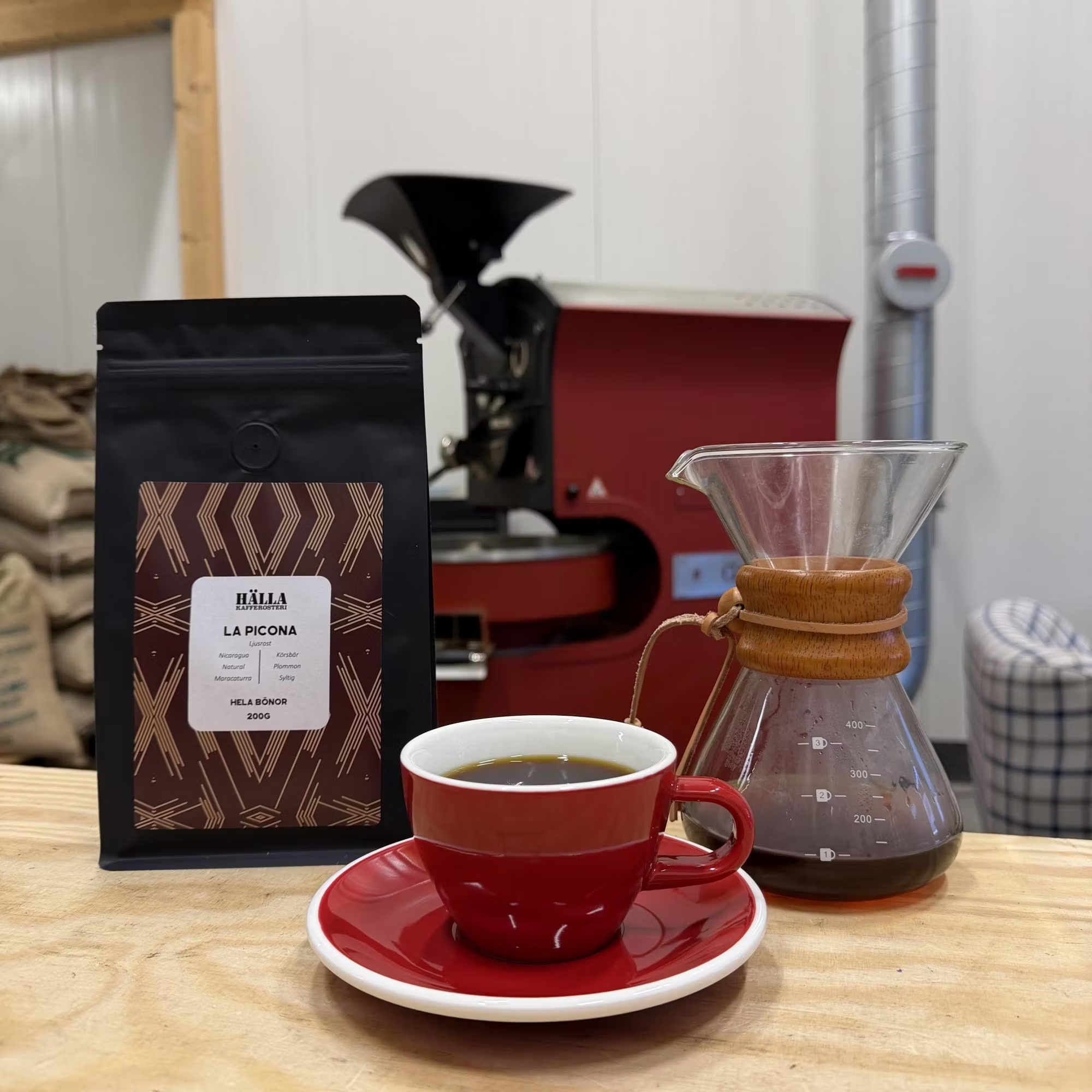
Specialty coffee is coffee that is of exceptionally high quality , has clear traceability to its origin and meets strict criteria for taste, production and sustainability.
While “regular coffee” is often about volume and standardization, specialty coffee focuses on:
✔️ origin
✔️ harvest
✔️ variety
✔️ process
✔️ taste
✔️ sustainability
This makes each batch unique — almost like a vinological terroir.
The concept of specialty coffee doesn't just mean good coffee – it's about quality throughout the chain from plant to cup.
This means that:
The coffee has at least 80 points on an SCA-based taste test (Specialty Coffee Association).
There is traceability to the farm/lot/producer .
The beans are free from defects that negatively affect the taste.
The production methods are carefully carried out (cultivation, harvesting, processing).
It is therefore a coffee that can be documented and defended all the way from field to cup.
Specialty coffees have defined flavor notes that can be described precisely, such as:
“blueberry, chocolate, jasmine, caramel, cinnamon” etc.
This is compared to regular coffee, which is often described as “bitter” or “strong” without nuance.
Specialty coffee farmers opt for hand-picking, careful sorting, and processes such as:
washed process (washed)
natural
honey
anaerobic fermentation
...all to highlight the best possible taste.
You know where the coffee comes from , who grew it and how it was processed.
This provides both better taste and better conditions for sustainable production.
| Property | Regular coffee | Specialty coffee |
|---|---|---|
| Points (SCA) | Often < 80 | ≥ 80 |
| Traceability | Often not documented | Full traceability |
| Taste description | Often general | Specified, nuanced |
| Process control | Production focus | Quality focus |
| Price | Low–medium | Medium–high |
The SCA (Specialty Coffee Association) uses an objective protocol to assess coffee:
Aroma
Taste
Acid
Body
Aftertaste
Balance
Purity
Reverberation
A coffee that reaches 80 points or more on this scale is classified as specialty coffee .
How the coffee is processed after harvest has a huge impact on the taste:
→ Clean, clear fruitiness
Suitable for those who like clear tones and balance.
→ Sweet, full-bodied and fruity
When the berries are dried whole in the sun, the bean gains more sweetness.
→ Sweetness + body
Partially sticky pulp provides round sweetness.
→ Complex and aromatic
Controlled fermentation produces more complex notes.
Just like in the world of wine, terroir plays a role — climate, soil, altitude and growing method affect the flavor profile.
For example:
🇪🇹 Ethiopia — floral, fruity, complex
🇰🇪 Kenya — clear acidity, fruitiness
🇨🇴 Colombia — balance and sweetness
🇧🇷 Brazil — chocolate and nuttiness
This makes specialty coffee a journey of flavors, not just a beverage.
When choosing specialty coffee, consider:
Light rust → acidity, fruitiness
Medium roast → balance, sweetness
Dark roast → fullness, cocoa/nut
Filter → pure taste
Pour-over → aromatic clarity
Espresso → concentrated body
Do you want:
fruity
chocolatey
floral
spicy?
There are specialty coffees for all tastes.
What does “specialty coffee” mean?
It is coffee with ≥ 80 points according to SCA's assessment system and full traceability from the grower to your cup.
Is specialty coffee expensive?
Sometimes — but not always. High cost is often due to craftsmanship, small scale and quality.
Can everyone make specialty coffee?
Yes, but it requires dedication, the right processes and focus on the quality of the raw materials.
Is specialty coffee better for the environment?
Often, because sustainable farming methods, traceability and fair pricing models are part of the definition.
Specialty coffee is more than just “good coffee.”
It is:
quality in focus
flavor profile with character
story from the grower
transparency in production
When you drink specialty coffee, you drink the journey of coffee .
👉 Do you want to explore specialty coffee in our webshop?
https://hallakafferosteri.com/kaffe