
 Svenska
Cart
Your cart is empty, but doesn't have to be..
Your cart is empty, but doesn't have to be..
Hälla Kafferosteri |28/05, 2026
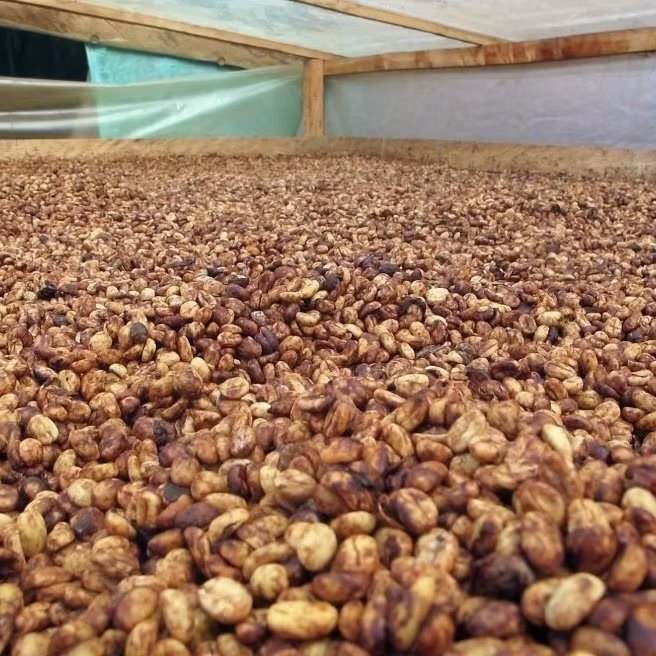
If you've looked at the labels on our coffee bags lately, you may have come across the term Honey Process – or honey-processed coffee in Swedish.
It sounds incredibly luxurious and sweet, and it's easy to believe that coffee farmers have drizzled honey over the beans during drying. But the truth is actually quite different. "Honey" instead refers to an ingenious artisanal method that gives the coffee a completely unique sweetness and fullness.
In this blog post, we'll find out what honey process actually means, why it's called that, and how it affects the taste in your cup of coffee.
👉 Do you want to learn more about specialty coffee?
https://hallakafferosteri.com/blogg/vad-ar-specialkaffe
To understand the honey process, we can see it as a golden mean between the two most common ways of processing coffee:
Washed coffee: All pulp and mucus are washed away before the beans are dried. This produces a clean, fresh and acidic coffee.
Dry coffee (Natural): The entire coffee berry is dried intact with the bean inside. Produces a very fruity and full-bodied coffee.
In a Honey Process , a mixture is made. The outer skin of the coffee berry is peeled off, but a certain amount of the sticky, sugary mucus layer (called mucilage ) is left on the bean while it dries.
When this mucus layer dries in the sun, it becomes extremely sticky and turns a golden color – it looks and feels exactly like honey! That’s where the name comes from.
When you buy honey-processed coffee, you will often see a color code. The color reveals how much of the sweet mucilage was left on the bean, and how much sunlight they received during drying. It is a high-level precision craft!
| Process | How much mucus is left behind? | How is it dried? | Flavor profile |
| White Honey | Very little (about 10-15%) | Open in bright sunlight. Dries quickly. | Clean, fresh and very reminiscent of a washed coffee. |
| Yellow Honey | A little more (about 25-50%) | Often in partial shade. Dries a little slower. | Balanced with mild acidity and clear fruit sweetness. |
| Red Honey | A lot (about 50-75%) | Dry on cloudy days or in the shade. | Full-bodied, sweet and with clear notes of ripe berries. |
| Black Honey | Almost everything (about 90-100%) | Cover and dry extremely slowly. | Extremely full-bodied, complex and with a deep, almost roasted sweetness. |
Because the coffee bean dries surrounded by its own natural fruit sugars, it absorbs lots of sweetness.
When you drink a honey coffee from, for example, Costa Rica or El Salvador, you can expect:
A natural and round sweetness (think cane sugar, maple syrup or honey tones).
A softer acidity compared to fully washed coffees.
A creamy mouthfeel and a full body.
Clear hints of stone fruits such as apricot, plum or red apples.
It is the perfect coffee for those who want a smooth, sweet and balanced cup without bitterness.
Besides the great taste, there is another great advantage of the honey process: it saves water .
Fully washing coffee beans requires enormous amounts of running water to flush away the mucilage. Because the honey process mechanically peels the fruit and allows the mucilage to dry in place, minimal water is used, making the method a more sustainable choice in regions where water is in short supply.
Roasting a honey-processed coffee requires a lot of finesse. Because the beans have so much natural sugar on the outside, they caramelize more quickly in the roasting drum. At Hälla Kafferosteri, we always adjust the roast profile to preserve the unique fruity sweetness without roasting the coffee too dark.
Are you curious to try it? Look out for our "Honey" branded bags in the webshop. They fit just as well in your filter coffee maker as a modern, sweeter espresso!
👉 Explore our range in our webshop:
Have a nice day!
/ Kaj and Dan, Hälla Coffee Roastery