
 Svenska
Cart
Your cart is empty, but doesn't have to be..
Your cart is empty, but doesn't have to be..
Hälla Kafferosteri |19/06, 2026
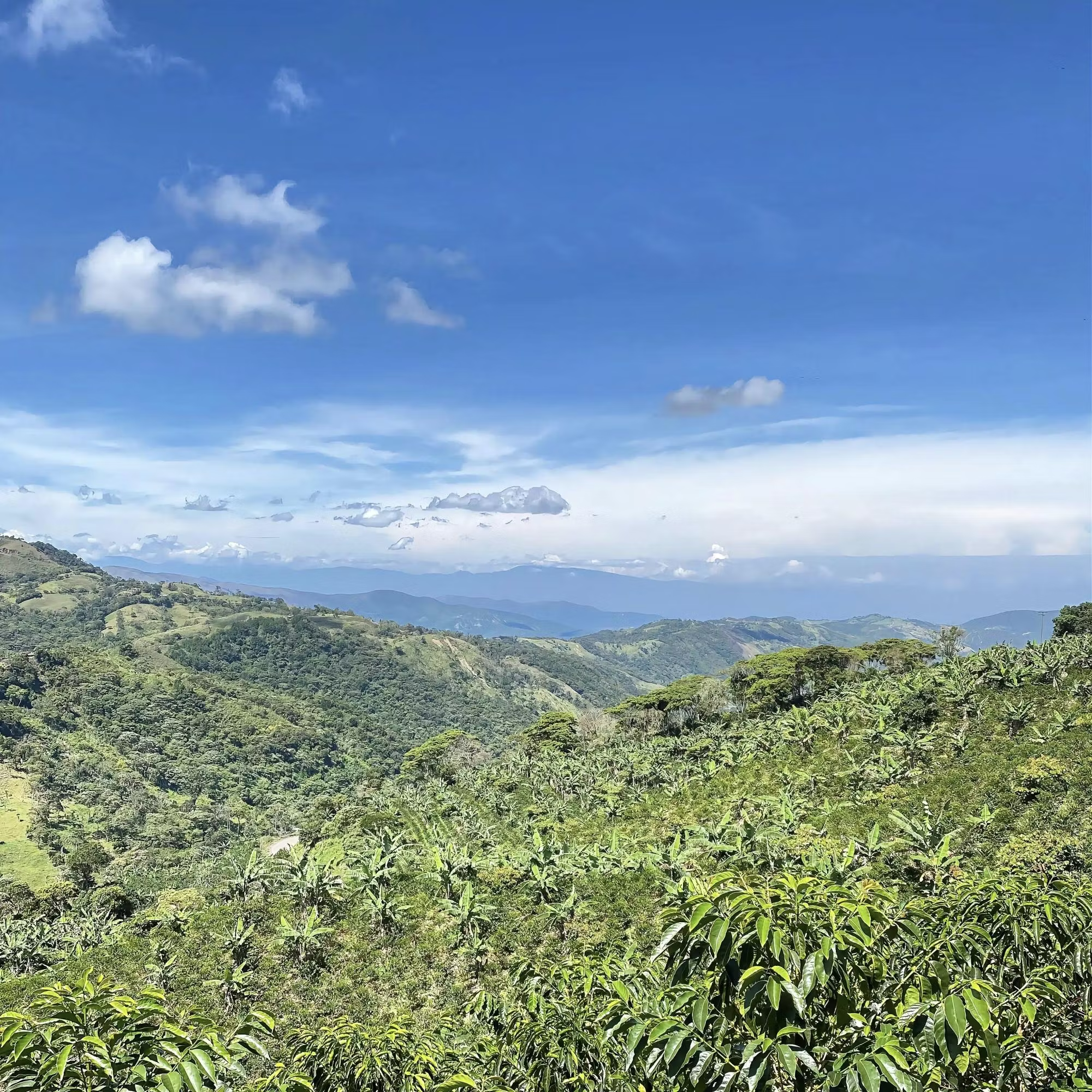
When we think of Venezuela today, it's often the oil industry, political turmoil, or economic challenges that come to mind. But if we rewind the clock a little over a century ago, the country was known for something completely different: its fantastic Arabica and high-quality cocoa.
Today, in the midst of one of the deepest economic crises in the country's modern history, the coffee bean has once again become a symbol of hope. A passionate movement of micro-roasters, baristas, and dedicated farmers has ignited a new spark. This is the fascinating story of how specialty coffee is not only surviving, but actually thriving in Venezuela.
👉 Do you want to learn more about specialty coffee?
https://hallakafferosteri.com/blogg/vad-ar-specialkaffe
During the 19th and early 20th centuries, Venezuela was a major player in the global coffee market. However, as the country's enormous oil reserves were discovered, the economic focus shifted completely, and agriculture fell into the shadows.
Despite the dramatic decline in exports, coffee culture never died out – it just moved indoors. Venezuela developed a strong, local consumption culture centered around espresso-based drinks. Coffee was drunk everywhere: in local panaderías (bakeries with espresso bars), restaurants and hotels. It didn’t matter if the person behind the machine was a trained barista, the cashier or the owner himself – the espresso machine ran hot. Traditional coffee was also widely brewed at home using a cloth filter (so-called manga or coffee sock).
In the 2010s, Venezuela was hit by an extreme economic crisis with hyperinflation and acute shortages of basic goods. For coffee producers and café owners, everyday life became an enormous challenge. The prices of raw materials and machinery soared daily, power outages became long-lasting (which hit cities like Maracaibo and Valencia hard) and the lack of government support was total.
Many were faced with the painful choice of leaving the country or staying and struggling. But in the midst of this instability, something unexpected happened. As the currency collapsed and imports were strangled, entrepreneurs were forced to look inward. They realized that the country's geographical location, stable microclimates, and rich soils offered perfect conditions for growing great coffee at home. The coffee bean – the "golden grain" – became a way out of the crisis.
The turning point for Venezuelan specialty coffee is often attributed to education. Schools that Accademia del Caffe (started by Pietro Carbone) and The Escuela Venezolana del Café (founded in 2011 by Paramaconi Acosta) began training tens of thousands of baristas.
As these newly graduated baristas entered the industry, they began to taste coffee with a whole new, critical eye. They began to demand higher quality and cleaner flavors. This created a domino effect:
The baristas and cafes wanted to serve better coffee.
Newly started micro-roasteries began searching for unique batches.
Demand finally reached the farms, motivating farmers to pursue higher standards for their green coffee, experiment with washed processes, and honey processes as well as learning more about proper drying.
Today, the menu at trendy cafes in Caracas has expanded far beyond the traditional espresso. It is now common to see artisanal brewing methods such as V60, Chemex, AeroPress and Clever Dropper, and interest in coffee exhibitions and barista competitions attracts thousands of visitors.
Venezuela has an incredible topography with growing altitudes that give the coffee a complex acidity and sweetness. Geographically, the cultivation is divided into three main mountain regions:
Andes (Táchira, Mérida, Trujillo): The traditional heart of the country's Arabica production. Here, coffee is grown at high altitudes in cool microclimates, giving the beans a slow ripening process and a balanced, elegant flavor profile.
Coastal Mountains (Cordillera de la Costa): The regions around Caracas and Miranda, where the coffee benefits from the humid winds from the Caribbean Sea combined with fertile mountain soil.
The Western Massif (Lara, Portuguesa): Areas that have historically produced large volumes, but where the focus is now increasingly shifting towards micro-lots and improved quality.
The future of Venezuelan specialty coffee is a story of sheer determination. There are still major logistical and economic hurdles to overcome, but optimism among the country’s coffee professionals is skyrocketing. Coffee has become more than just a beverage; it is a driver of innovation, education, and pride.
International experts agree that Venezuelan coffee has amazing potential thanks to the country's unique atmospheric conditions. As farmers continue to improve the quality of their harvests, it's only a matter of time before the rest of the world once again opens its eyes to this hidden coffee treasure.
At Hälla Kafferosteri we are constantly fascinated by the dedicated producers of the coffee world. The story of Venezuela shows the unique ability of coffee to unite people and build bridges, even under the toughest circumstances. Keep your eyes and ears open for exciting new coffees in our range.
👉 Do you want to drink specialty coffee? Then visit our webshop:
https://hallakafferosteri.com '
Have a nice day!
/ Kaj and Dan, Hälla Coffee Roastery