
 Svenska
Cart
Your cart is empty, but doesn't have to be..
Your cart is empty, but doesn't have to be..
Hälla Kafferosteri |7/07, 2026
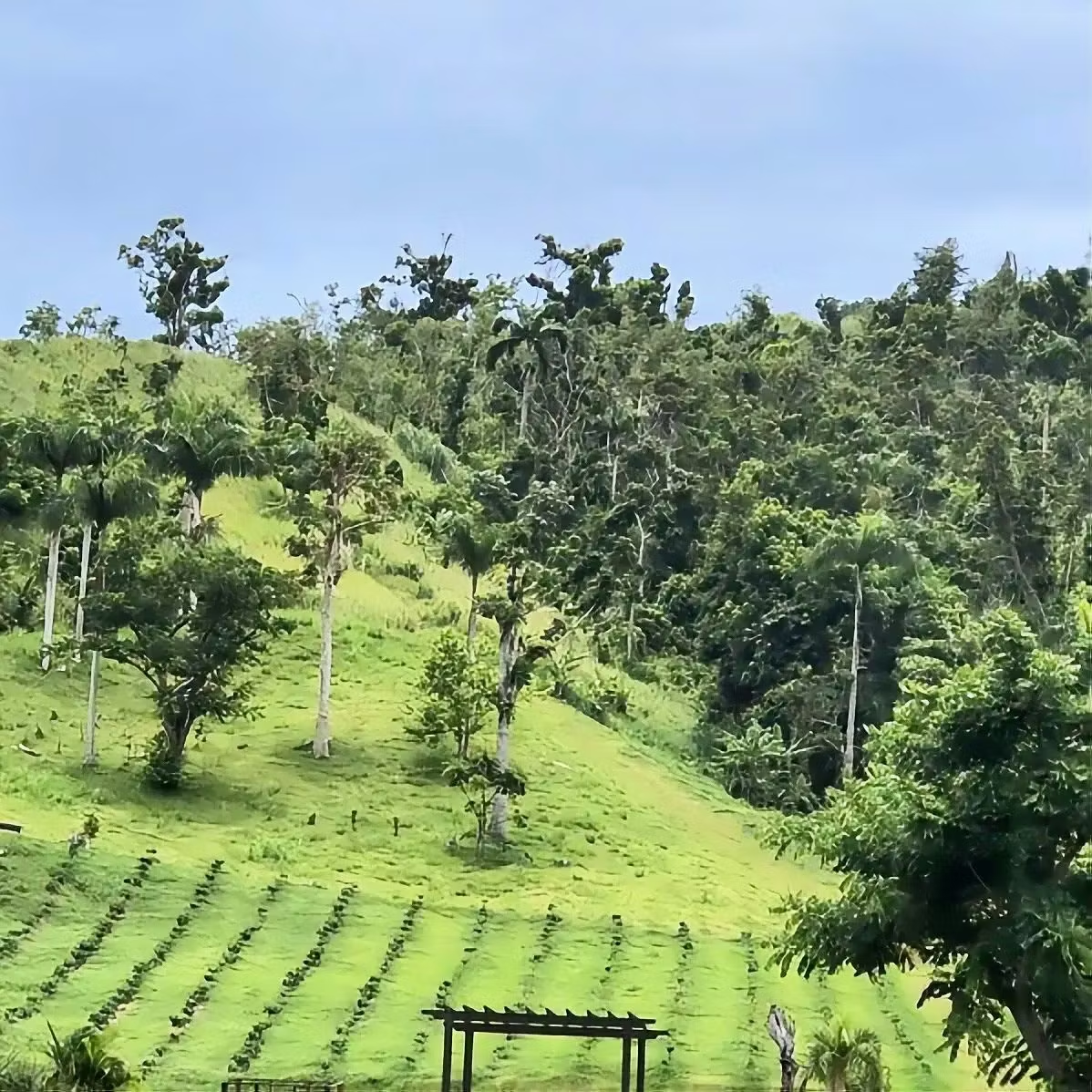
When we talk about specialty coffee origins, we often think of the highlands of Ethiopia, the tangy beans of Kenya, or the fruity micro-lots of Colombia. But there's one Caribbean island with a coffee history so rich, dramatic, and resilient that it deserves a place on the coffee map: Puerto Rico .
Over the past decade, a new wave of passionate producers and baristas has risen to the island. They have broken the prestigious 90-point mark (according to the SCA scale) and set their sights on reclaiming their former glory. Join us at Hallå Kafferosteri as we delve deep into Puerto Rico’s bittersweet coffee history and the fascinating evolution towards modern specialty coffee!
The history of coffee in Puerto Rico dates back to 1736, when the first coffee plants were introduced during Spanish colonial rule. The island proved to have optimal conditions: the fog-shrouded mountainous areas in the interior, the nutritious volcanic soil and the tropical climate were perfect for the Arabica bean.
During the 19th century, the island experienced its first coffee golden age. Puerto Rico developed into the world’s seventh largest coffee producer, producing at its peak over 13.6 million kilograms of coffee a year. The coffee from here was so exceptional in its flavor profile – known for being round, chocolaty and perfectly balanced – that it was drunk in European royal houses and went by the name “The Coffee of Popes and Kings” .
But history took a dramatic turn. When the United States annexed the island in 1899, the economic focus shifted to sugarcane production. This, combined with extremely costly hurricanes (such as San Ciriaco in 1899 and later devastating storms), wiped out the proud coffee haciendas. By the mid-20th century, production collapsed to the point that Puerto Rico was forced to start importing coffee to cover its own local consumption.
Growing coffee on a Caribbean island means living in constant symbiosis with – and respect for – the forces of nature. When Hurricane Maria swept through the island in 2017, almost 80 percent of Puerto Rico’s coffee production was wiped out overnight. Just three years later, in 2020, the island was hit by Hurricane Isaias.
But from the ashes of these disasters, an incredible resilience has been born. Instead of simply replanting coffee in mass production, a new generation of coffee farmers has chosen to focus wholeheartedly on quality over quantity . This is where Puerto Rico’s Specialty Coffee journey really takes off.
Today, the island's farming landscape has recovered, and producers are collaborating with coffee agronomists to combine traditional methods with modern innovation.
Traditionally, varieties such as Typica and Bourbon have laid the foundation for the island's coffee reputation. Today, local and resistant varieties such as Limaní , Frontón and Obatá are also grown.
To achieve the absolute highest quality, local enthusiasts (including renowned producers like Roberto Atienza at Hacienda San Pedro) are experimenting with exciting methods. For example, did you know that innovative projects have been carried out on the island where coffee berries are picked in total darkness ? The aim is to keep the coffee berries cool during harvest to preserve the most subtle and complex aromas before processing begins.
If you manage to get your hands on a bag of authentic Puerto Rican specialty coffee, you can expect an incredibly elegant and balanced cup. The flavor profile is often characterized by:
Base notes: Rich, creamy milk chocolate, cocoa and sweet nuts (almond/hazelnut).
Acidity: A subtle, ripe citrus or stone fruit-like acidity.
Body: Full-bodied and buttery mouthfeel with a long, clean and sweet aftertaste.
It is a coffee that charms both those who love a classic, deep cup of coffee and those who are looking for the fine nuances of a modern artisan coffee.
Today, coffee culture is booming in cities like San Juan. Local baristas are winning national and international competitions, and pride in the local craft is immense. The challenge lies in the high production costs on the island and the limited geographical area – but that’s exactly what makes each bean an exclusive micro-lot.
At Hälla Kafferosteri we love to highlight these hidden coffee treasures. Drinking specialty coffee is not just about great flavors; it's about supporting the farmers who refuse to give up, despite storms and economic setbacks. Puerto Rico is showing the coffee world that with passion, innovation and the right conditions in the soil, you can rise up and once again produce world-class coffee.
Have you tried coffee from Puerto Rico or any other Caribbean origin? Feel free to share your taste experiences in the comments below, or check out our current range of freshly roasted specialty coffees in the online store!
👉 Explore our range in our webshop:
Have a nice day!
/ Kaj and Dan, Hälla Coffee Roastery