
 Svenska
Cart
Your cart is empty, but doesn't have to be..
Your cart is empty, but doesn't have to be..
Hälla Kafferosteri |16/03, 2026
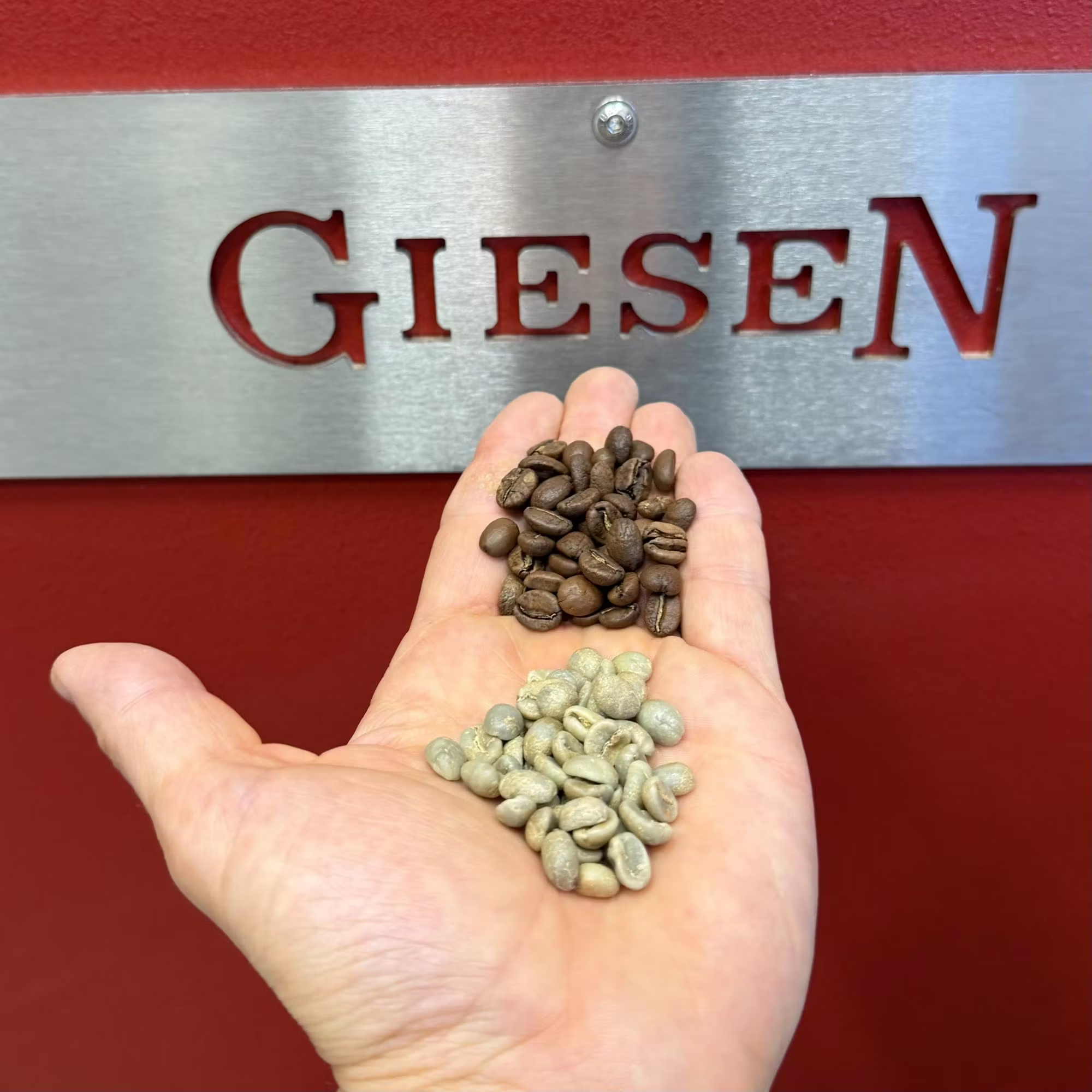
Coffee is one of the world's most beloved beverages. Over 2 billion cups of coffee are drunk every day, but few know the long and fascinating journey from coffee berries on a tree to the roasted beans that end up in your coffee cup .
In this guide, we go through how coffee is grown, harvested, processed and turned into coffee beans – step by step.
Coffee comes from the coffee bush (Coffea) , a tropical plant that produces small red fruits called coffee berries or coffee cherries .
Inside each coffee berry are usually two coffee beans , which are the seeds that are later roasted and ground into coffee.
The two most common species are:
Accounts for approximately 60–70% of the world's coffee production
Milder and more aromatic taste
Often grown at higher altitudes
Stronger and more bitter taste
Contains more caffeine
Grows better in warmer and lower climates
Coffee grows in what is called the coffee belt – an area around the equator between the Tropics of Cancer and Capricorn .
The largest coffee producing countries are:
Brazil
Vietnam
Colombia
Ethiopia
Honduras
Indonesia
Coffee requires a tropical climate with even temperatures and abundant rainfall .
Ideal conditions:
Temperature: 18–24°C
Altitude: 600–2000 meters above sea level
Soil: nutritious and well-drained
A coffee bush can grow up to 10 meters tall , but on plantations it is often pruned to about 2–3 meters to make harvesting easier.
Planting
Flowering
Coffee berries develop
Maturity
Harvest
From planting to the first harvest, it usually takes 3–4 years .
When the rainy season begins, the coffee bush blooms with white, jasmine-like flowers .
The flowering period only lasts a few days but is crucial for the harvest.
After pollination, small green coffee berries begin to grow.
It usually takes 6–9 months for coffee berries to ripen.
During this time they change color:
Green
Yellow
Red (ripe)
It is the red berries that are considered perfectly ripe for harvest.
There are two main methods of harvesting coffee.
The most qualitative method.
Only ripe berries are picked
Common on specialty coffee plantations
Very labor-intensive
Advantages:
Better quality
Minor defects
More common on large plantations, especially in Brazil.
Machines shake the trees so that the berries fall down.
Disadvantages:
Ripe and unripe berries are mixed
May provide lower quality
After harvesting, the berries must be processed to extract the beans .
There are three main processes.
The most common method for high-quality Arabica coffee .
Process:
The coffee berries are pulped (the skin is removed)
The beans are fermented in water
They are washed clean
Dried in the sun
Results:
Pure taste
High acidity
Fruity notes
The oldest method.
Process:
Whole coffee berries are dried in the sun
The pulp remains
The beans are taken out after drying.
Results:
Sweeter coffee
Fuller body
Berry flavors
Common in:
Brazil
Ethiopia
A hybrid between washed and natural.
Some of the fruit pulp is left behind during drying.
Results:
Sweeter taste
Soft acidity
Complex coffee
After processing, the beans must be dried to approximately 10–12% moisture content .
Drying usually takes place on:
Sun drying beds
Concrete terraces
Mechanical dryers
This process can take 7–20 days .
After drying, the beans are called green coffee .
Before exporting:
Shell to be removed
The beans are sorted
Quality is checked
They are then exported to coffee roasters around the world .
Roasting is the process where the coffee's flavor develops.
During roasting:
Sugars are caramelized
Oils are released
Aromas develop
Three common rust grades:
Fruity notes
High acidity
Balanced taste
Common in Sweden
Strong taste
More bitterness
After roasting, the coffee beans are ground.
The degree of grinding affects the taste:
Coarse – pressed coffee
Medium – brewed coffee
Fine – espresso
Freshly ground coffee gives the best aroma and flavor .
From planting to finished cup, the process can take:
3–5 years
The steps:
Planting
Growth
Flowering
Harvest
Processing
Drying
Roasting
This makes coffee a time-consuming and artisanal product .
Several factors affect the taste of coffee:
Higher altitude often produces more complex flavors .
Mineral-rich soil gives more character.
Temperature and rain affect development.
Washed, natural or honey give completely different flavor profiles.
Usually two , but sometimes just one – then it is called a peaberry .
Approximately 0.5–1 kg of roasted coffee per year .
Up to 30–40 years , but high production usually occurs in the first 15–20 years .
Coffee undergoes a long journey before it ends up in your cup:
The coffee bush is grown in tropical climates
Coffee berries ripen on the tree
The berries are harvested
The beans are processed and dried
Green coffee is exported
The beans are roasted and ground
The result is a beverage that combines agriculture, craft and science .
The next time you drink coffee, know that each cup represents years of work and a global journey from coffee berry to bean .
Do you want to experience the taste of really fresh coffee?
At Hälla Kafferosteri we roast coffee in small batches for maximum flavor and aroma.
Freshly roasted specialty coffee
Carefully selected coffee beans
Sustainable and traceable cultivations
👉 Explore our range and discover the difference with freshly roasted coffee.