
 Svenska
Cart
Your cart is empty, but doesn't have to be..
Your cart is empty, but doesn't have to be..
Hälla Kafferosteri |8/06, 2026
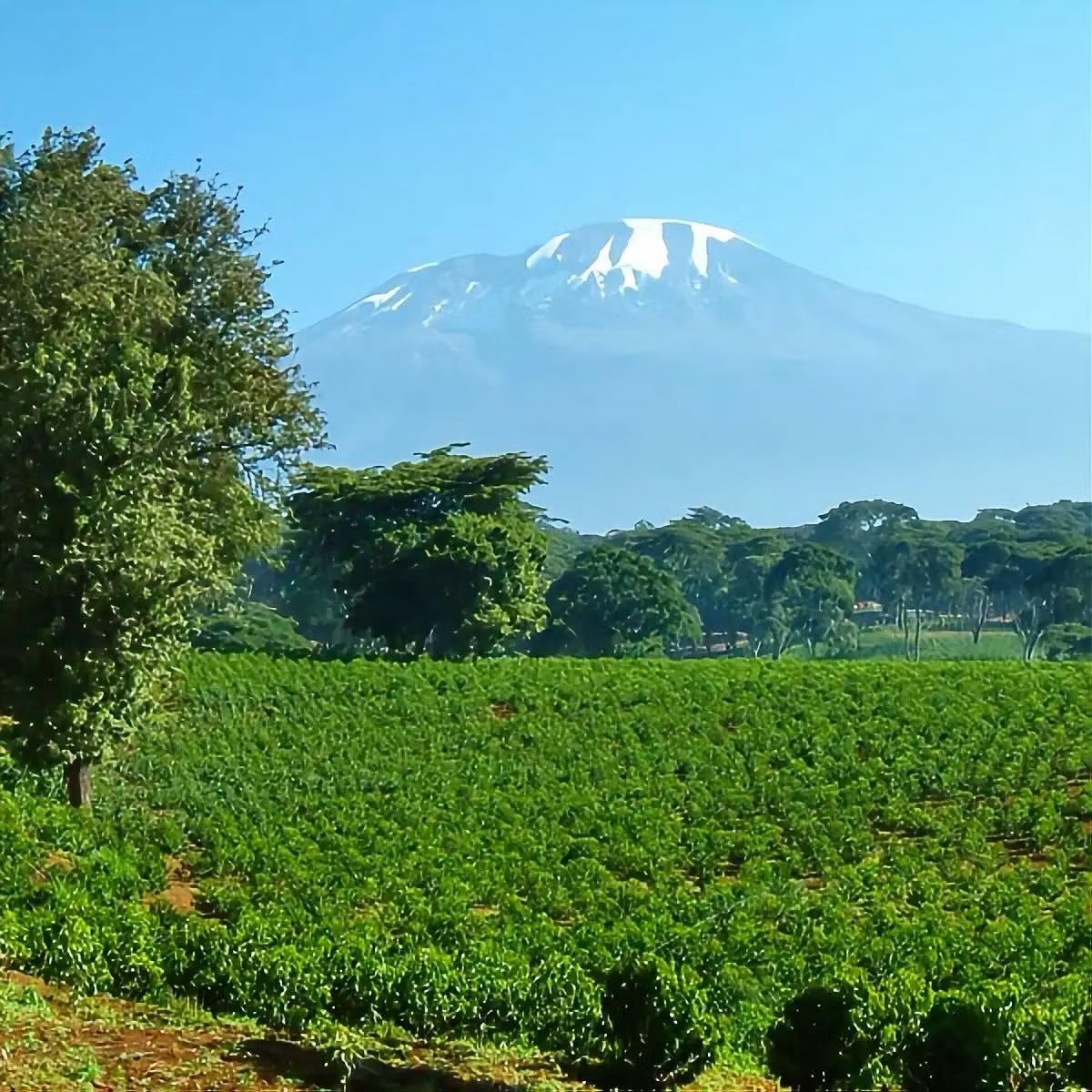
Tanzania is one of East Africa's most fascinating coffee countries, but it is also an origin often overshadowed by its more famous neighbours Kenya and Ethiopia. Yet the country has a rich production tradition that stretches from the volcanic slopes of Mount Kilimanjaro to the dramatic southern highlands.
At Hälla Kafferosteri we love traceability and craftsmanship. Here's our deep dive into how coffee production in Tanzania actually works, from planting to export, and what makes these beans so special in your cup.
👉 Do you want to learn more about African coffee?
https://hallakafferosteri.com/blogg/afrika
Coffee’s roots in Tanzania are older than most people think. Long before European colonizers arrived in the area, the Haya people of northwestern Tanzania cultivated an indigenous variety of Robusta. But this coffee wasn’t brewed – the beans were boiled with spices and chewed as a stimulant in social and ceremonial settings.
Commercial production of high-quality Arabica coffee took off in the late 19th century when Catholic missionaries introduced Bourbon plants from Réunion Island to the Mount Kilimanjaro region. Today, coffee is one of the country's most important export crops, and production is almost entirely dominated (around 90%) by over 450,000 small-scale family farms.
Tanzania's coffee production is geographically divided into two main zones, and they differ markedly in both climate and growing conditions. Generally, Arabica is grown at altitudes between 1,000 and 2,500 meters above sea level .
Here we find classic regions such as Kilimanjaro, Arusha, Manyara and Tarime . The coffee grows in extremely nutritious, volcanic soil and is often grown under the shade of banana trees. The northern zone is known for producing coffee with a distinctive, vinous acidity, full body and complex floral notes.
Regions such as Mbeya, Ruvuma, Songwe and Njombe have blossomed into major producers in recent decades. The climate here is more seasonal with distinct rainy and dry periods. The coffee from here tends to have a slightly lighter body but a fantastic, fruity sweetness and a very clean flavour profile.
Once harvested, the coffee berries are typically processed using the fully washed method. The berries are peeled and fermented in water before being spread out on raised African drying beds to dry in the sun.
It is during the subsequent sizing that Tanzania's most famous export is separated: Peaberry .
What is a Peaberry? Normally, two flat coffee beans develop inside a coffee berry. However, in about 5–10% of the berries, only one seed is fertilized, resulting in a single, perfectly round bean.
Why are they so popular? Because Peaberry beans are perfectly round, they roll more evenly in the roaster's roasting drum. Many coffee experts also believe that because the single bean has received all the nutrition inside the berry on its own, it has a more consistent, intense and sweet flavor profile. Tanzania has become a world leader in sorting out and selling Peaberry as its own exclusive quality variety.
Most of Tanzania's coffee is sold through a centralized auction system run by the Tanzania Coffee Board (TCB) in the city of Moshi. Every week during the harvest season, exporters and taste experts gather to bid on coffee lots based on quality samples.
The auction system has historically provided a stable structure, but for the specialty coffee world it has sometimes been a challenge because it makes it more difficult for roasters to buy directly from a specific farm ( Direct Trade ).
Today, however, the market is moving forward. The government has opened up "direct exports," allowing certified cooperatives and high-quality farms to sell their coffee directly to international specialty coffee buyers. This dramatically increases traceability and ensures that farmers get better pay for their very best harvests.
Coffee production in Tanzania is all about craftsmanship, small-scale production and a unique heritage. Whether you drink a classic washed Arabica from the slopes of Kilimanjaro or an intense Peaberry from the southern highlands, Tanzania offers a clean, fresh and exciting taste experience.
We at Hälla Kafferosteri are constantly looking for the most balanced and traceable batches from Tanzania to be able to offer you the very best the country has to offer.
Have you tried coffee from Tanzania yet? Do you prefer classic beans or the round variety Peaberry?
👉 Do you want to drink specialty coffee? Then visit our webshop:
Have a nice day!
/ Kaj and Dan, Hälla Coffee Roastery