
 Svenska
Cart
Your cart is empty, but doesn't have to be..
Your cart is empty, but doesn't have to be..
Hälla Kafferosteri |2/06, 2026
Have you ever taken a sip of coffee and felt the wings of history flutter by? If you drink a really good specialty coffee, chances are its roots can be traced back to the barren, sun-drenched mountain slopes of Yemen.
While the coffee plant ( Coffea arabica ) has its botanical origins in Ethiopia, it was in Yemen that coffee culture was actually born. It was here that people first began to grow, roast, and brew coffee in the way we do today.
Join us on a journey to the cradle of coffee and discover why Yemeni coffee is still one of the world's most sought-after (and mysterious) delicacies.
👉 Do you want to learn more about specialty coffee?
https://hallakafferosteri.com/blogg/vad-ar-specialkaffe
Yemen's coffee history dates back to the 15th century. Legend has it that Sufi monks used the coffee brew to stay awake during their nightly prayers and meditations. They quickly realized that the tiny beans provided a focused energy like nothing else.
During the 16th and 17th centuries, coffee transformed from a local religious beverage into a global commodity. Yemen gained a strict monopoly on the coffee trade through the legendary port city of Al-Mukha (or Mocha ). This is where the name "Mocha coffee" comes from!
Every sack of coffee shipped to Europe and Asia passed through this port. To protect their monopoly, the Yemenis boiled the beans before export so that no one could plant them in other countries. The monopoly eventually broke when smugglers managed to smuggle out green beans, but Yemen's status as the epicenter of coffee was already cemented.
Growing coffee in Yemen is not for the faint of heart. It is a craft that has remained largely unchanged for 500 years.
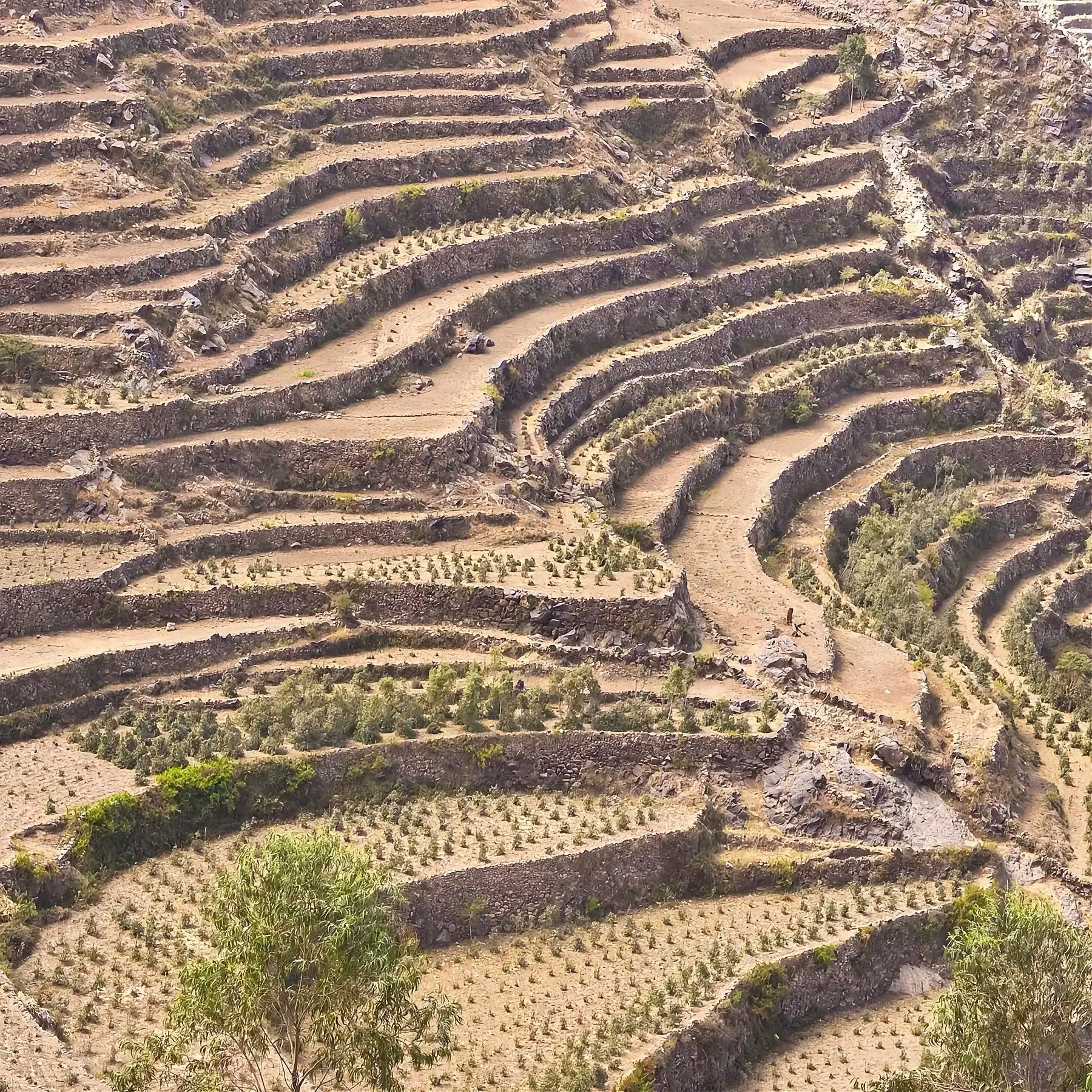
The coffee is grown on ancient stone terraces that cling to steep mountain sides, often at extreme altitudes between 1,500 and 2,500 meters above sea level.
The dry climate and high altitude force coffee trees to fight for their survival. This creates a unique stress on the plant that causes the beans to develop an incredible concentration of sugars and complex flavors.
Rainwater and terraces: The crops are watered almost exclusively by natural rainwater and fog.
No chemicals: Yemeni coffee is generally organic by default. Artificial fertilizers and chemical pesticides are almost nonexistent.
Dry Processing (Natural Process): Due to the chronic water shortage in the country, the coffee berries are dried whole in the sun, often on rooftops. This gives the coffee its characteristic, full-bodied and fruity flavor profile.
If you're looking for a bland and predictable cup of coffee, Yemen is the wrong place to look. Yemeni specialty coffee is known for being wild, complex, and deeply aromatic .
When you brew a cup, you can expect a flavor explosion that often includes:
Dark, rich chocolate (real mocha flavor! )
Exotic spices like cardamom, cinnamon and ginger
Dried fruit, raisins and ripe berries
A vinous (wine-like) acidity
It is a coffee that challenges the taste buds and is best enjoyed as a filter coffee (V60/Chemex) or as a single-origin espresso for the brave.
Just like with wine, Yemeni coffee is known for its microclimates and specific regions that give it its unique character. Since the beans are often named after the area or tribe they come from, here are the three most legendary regions to look out for:
Bani Mattar (Mattari): Located west of the capital Sanaa at extreme altitudes, the coffee from here – often called Mattari – is perhaps Yemen’s most famous. It is known for its strong, full body, an almost vinous acidity and a very distinct dark chocolate aftertaste.
Haraaz (Haraazi): A spectacular and ancient region of terraced fields wedged between dramatic mountain peaks, coffee from Haraaz ( Haraazi ) tends to be somewhat cleaner and fruitier in flavor than other Yemeni coffees, often with clear notes of red berries, dried fruit, and light chocolate.
Bani Ismail: A smaller but highly regarded sub-region of Haraaz, it produces extremely high quality beans that often have a very complex, spicy and floral aroma profile that fascinates the specialty coffee world.
Drinking coffee from any of these regions is like drinking liquid history – each area carries its own unique taste sensations.
Drinking Yemeni coffee today is a privilege. The country's geopolitical situation, civil war and water shortages make exporting extremely difficult and risky. In addition, coffee cultivation competes with Qat – a local, fast-growing drug plant that draws in enormous amounts of the precious water.
Despite this, passionate farmers and cooperatives are fighting to keep the coffee heritage alive. By purchasing specialty coffee from Yemen at fair prices (Direct Trade), we in the coffee world are supporting an ancient culture and providing farmers with a sustainable livelihood.
At Hälla Kafferosteri we are constantly looking for beans with a unique history and exceptional character. Look out for unique batches from Yemen and other historic coffee regions in our range – roasted with love and precision in Västerås.
👉 Do you want to explore specialty coffee in our webshop?
https://hallakafferosteri.com/kaffe
Have a nice day!
/ Kaj and Dan, Hälla Coffee Roastery